Category: Blog

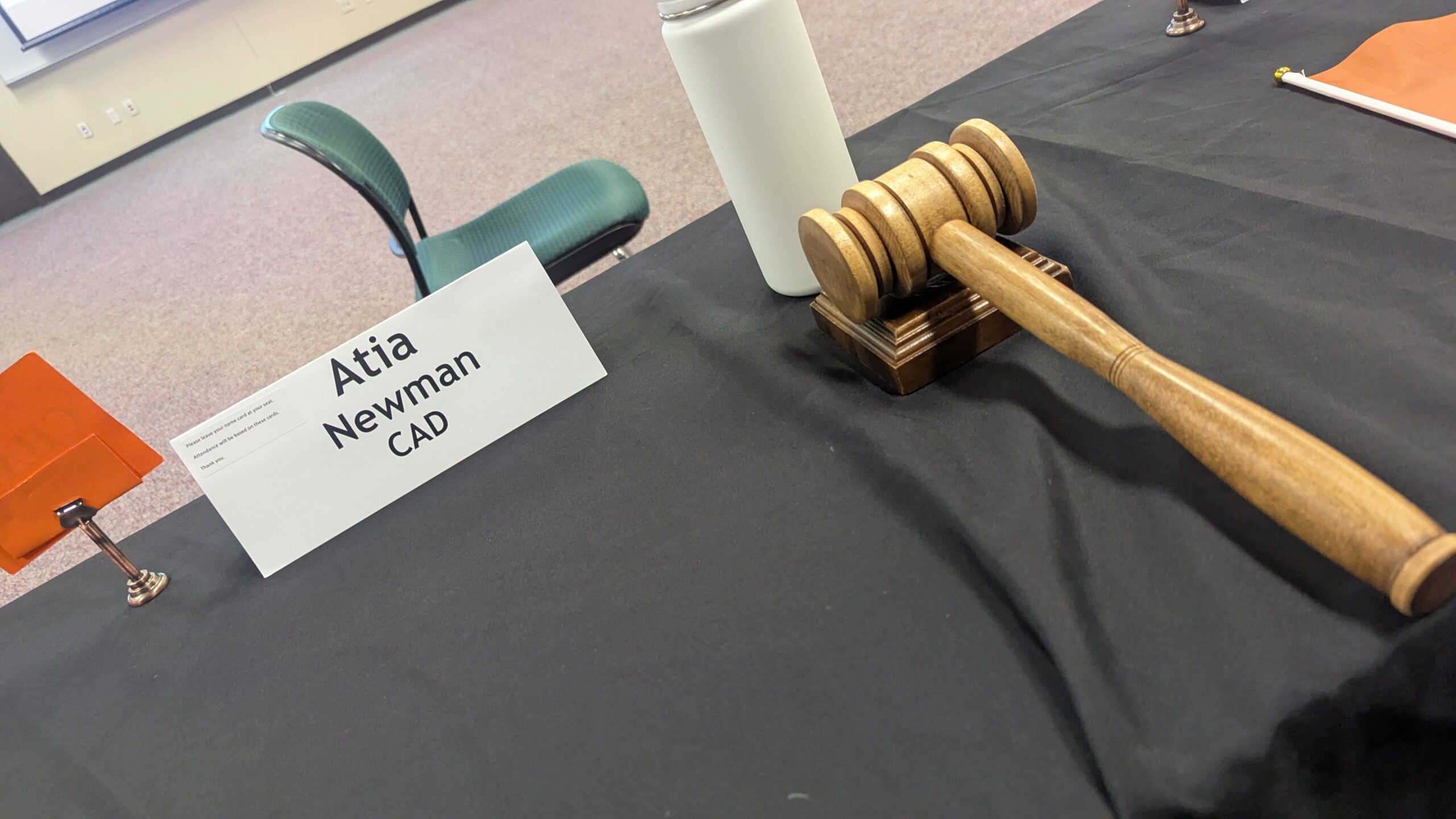
  • Faculty Senate Chair at RIT

    Faculty Senate Chair at RIT

    After three years as Chair of the RIT Faculty Senate, I have come away with a treasure trove of insights, realizations and strategic understanding. Leadership, as experienced and viewed close-up from this role has taught me so much, I have spent the past 6 months simply processing everything, trying to find the words to make sense of everything.

    The first thing to discuss is how aptly the term “drinking from a fire hose” fits when describing a high-pressure, high information role like this one. As a relatively junior faculty member (in my brain, I’m still a teenager), I went from an abstract understanding of how a university functions to… feeling the need to understand and speak knowledgeably about everything! Or, I could risk being considered a wishy-washy inept leader who coasts along without making waves.

    I have my first Vice Chair to thank for teaching me it wasn’t enough to trust my colleagues to help me when I need it. Or to expect them to be fully honest if it didn’t serve their interests. I was pushed to learn “the rules” for myself, and I found that knowledge really does come with power. After an awkward start, I started to piece together the structure of everything around me, and place the complaints, the grumbles and the snark into the context from which it is born. I started to figure out that people (faculty are people) rarely complain about the root of the problem. Very often the focus ends up on the minor inconveniences created by problem.

    The circular discussions of the Senate started to make sense. The underlying issues came from structural inconsistencies across the many academic silos that exist in any institution.

    The One Payroll Drama
    Every great story needs a Call to Adventure to get the ball rolling, and this was ours. At a point when the world was still recovering from a pandemic, financial insecurity was rife and everyone was burned out on compassion and resources, the Faculty Senate found itself at the center of a disturbing decision to “improve efficiency” in our payroll systems.

    The story itself is involved and ultimately meaningless in the long-run, but it bears scrutiny in how it reveals the shortcomings in standard (corporate?) decision-making systems that forget that mere numbers do not accurately reflect reality… or the will of the people. In a short 6-odd weeks, through the actions of a few mathematically inclined members and faculty members who understand how actions lead to consequences, the matter came to a head, resulting in a large forum ready to tar and feather our university leaders. The fallout resonated across all corners of the university, and suddenly, everyone was listening.

    Shared Governance and the Structure of Decision-making. “What’s the point?”
    A common refrain among faculty and staff is that leaders do what they want and nobody cares what “the little guy” thinks. This kind of thinking leads to nodding heads and no good solutions. Every time a problem came up, I realized I was uniquely positioned to hear two sides of the discussion. Just as quickly, I discovered that neither side was being forthcoming about their perspective. By implementing an anonymity clause, I began to bring forth ideas and suggestions that contradicted the standing narrative.

    Complaints became points of discussion, disagreement became debate. People who claimed to not care began to test the waters and bring forward bigger problems, and with a little nudging, better solutions.

    Collective Brainpower and “True Believers”
    Change does not happen through the actions of a single person, and everything that the Faculty Senate accomplished was the collective effort of a number of active members. Most notably, the Executive Committee, reformed in the first year after three officers had to relinquish their roles for various reasons came together with a new Vice Chair, Sam Malachowsky the devil’s advocate, Communications Officer Stephen Aldersley joining us with decades of leadership and governance savvy, Operations Officer Hamad Ghazle the mediator, Treasurer Keri Barone the Observer, and our secret weapon, Senate Coordinator Tamaira Brown. This group came together with a zeal for change and a willingness to roll up their sleeves and do the work.

    Before we knew it, we were strategizing a new path forward, exploring how to bring the disparate players together and align efforts to unify the scattered processes across this academic engine. Each member had a role to play and a cause to champion. And we all worked for each others’ success, because we were functioning purely in service of the betterment of RIT.

    Leaders and Allies.
    This new energy and awareness started to extend beyond the confines of the Senate. Before we knew it, we were engaged in discussions with directors and leaders of different units. Everyone was interested in solving “the problem”. Our Provost was an ally and various officers were interested in pulling back the curtains to explain how things work and where our expectations fall short. It turns out, many corners of the university evolved in response to localized issues, seemingly designed to solve one problem, only to find themselves restricted by systems or resources that prevented them from doing more. Even stranger are the number of offices and units that have been taking on duplicative work because they had to respond to a need. It made me think of a small fishing village that had to become a metropolis overnight. Everything works, but solutions grown organically are not always “efficient”, and overextended units are not always given the recognition they deserve or the resources they need to flourish.

    Compared to many universities, RIT is still young, and it shows most in the systems that are not yet in place. Our managers (not leaders) are our biggest weakness, because they do not operate from a place of visionary brilliance, but from a place of fear and compliance. The scarcity mindset that is deathly afraid of failure stifles independent thinkers and rewards only the blind followers. “Training” is a joke, led by Legal and HR, who’s only goal is to avoid litigation and scandal. The failure of mediocre managers is then covered up to “protect reputations” and no one is held accountable.

    Is Accountability Ruin?
    This becomes the final question for me in this rambling post. Accountability is necessary for any healthy institution. The truth can be manipulated, but ultimately, it comes to light where it cannot be ignored. But how should accountability work? A devil’s advocate once suggested public announcements of abject failures, with a requirement of creating a plan to correct or rectify resulting issues. A less fraught suggestion is to temper compassion with objective clarity. To collect feedback on administrators on an annual basis and not settle for “good enough”.

    Where is the Renaissance When You Need it?
    Higher Education in the US is at an inflection point. Education is politics, and healthy debate is endangered. In a time where institutions are being held at gunpoint from multiple sides, it can be easy to hide behind corporatized legal-doublespeak. I can’t help but think that the only winners in the long run will be the institutions that hold themselves to the standards nobody cares about today. Real academic inquiry and exploration must come from a place of courage, not fear. This cannot be an exercise in capitalism, it has to be an exercise in enlightenment.
  • Diverse Content or Just Diversely Wrapped?

    Diverse Content or Just Diversely Wrapped?

    Though this post was prompted by Marvel characters, it speaks to the overall issue of how Hollywood seems to be addressing diversity as a whole.

    This new trend of pulling various well-established characters out of a whole set of proverbial closets is disturbing at the very least. At worst, it is the basest and least effective way to diversify existing franchises. We’ve been seeing this for a while now, old TV shows are being rebooted in a new “diverse” light. Characters are being re-gendered, re-oriented and wrapped in new exciting racial identities with no regard to what it says about the characters, and no actual understanding of how adding a label to a person should affect storylines.

    It makes one wonder whether these amazingly talented teams of creators are unaware of the implications of these changes, or if they just don’t care enough. Why are these teams so hesitant to do the very difficult work of writing authentic (and new) diverse characters into their existing storylines?

    As all diverse people know, our diverse labels affect more than our appearance. We have different experiences, based on what type of diversity we represent, we make different choices in our lives and overcome a huge variety of unique hurdles to get where we are. Our experiences make us more resistant to certain types of pressures, and more vulnerable to others, and just throwing a color and an orientation onto an already established character is not a good solution to representing the complexity that comes with said labels.

    Shallow changes don’t make Diverse Characters

    Take, for example, the recent “coming out” of Loki, Marvel’s very popular part-time villain character from the Avengers and Thor series.

    Yes, it is wonderful to see a major character in the Avengers suddenly represent the LGBTQIA+ population, however, was the villainous God of Mischief and Sower of Chaos really the best way to represent the community?

    Am I the only person troubled by the idea that the Marvel team translated mischief and chaos into bisexuality? Considering how Bisexuality has for decades been a disputed orientation, even within the gay community, do we really want to tar this population with yet another connotation? Instead of shallowly indulging the diversity movement with these “blackface” rewriting techniques, how about actually creating something new?

    The world has finally begun to understand and accept that diversity is not a costume and cannot be worn or discarded whenever necessary. It is not okay to dress up like a Native American or an Arab for Halloween anymore, and recently we have seen a lot of bloodthirsty call-outs to that effect. While I do think the bloodlust is overkill, the basic idea makes sense.

    Still, nobody seems to notice that just recreating formerly white characters with a new orientation or a different gender (looking at you, Thor!) or adding in a little exotic blood is just as insulting as not diversifying at all.

    I get that there is a need to correct the past, and that many teams are desperately looking for ways to prove that they support the presence of the “other”. However, it is important to note that the field of character design generally comes with a great deal of back-end development (or it should). An average character bio will start with basic delineations; age, race, gender, orientation, geographic location, maybe political leanings or economic status, but can get as in-depth as outlining favorite foods, allergies, medical history.
    Everything is on the table and anything can be relevant in the creation of a character.

    Why? Because any or all of these factors will control the character’s motivation. And in story, motivation is everything.

    Take, for example, Peter Parker aka Spider Man. Orphaned at a young age, economically precarious and raised in Queens, NY by his aging Aunt May. The boy was an outcast because he was super smart (a nerd), which initially made his life hell in high school until he was caught in a strange accident that gave him superpowers. It was this sharp mind that ultimately helped him process his poor choices and the empathy that comes with having experienced loss (thanks to Uncle Ben), that helped him take the noble route to superhero-dom. Had his background been more privileged, he could just as easily have been a villian instead. In fact, I’m pretty sure Harry Osborne was created to specifically illustrate that fact.

    This unprivileged background and sharp mind is why Spider Man was able to be diversified into a Multiverse of characters, because his “whiteness” was not a huge contributor to the storyline.
    Because poverty and brains do not belong to any one race, and there are millions of smart young teens in the world who experience bullying in their lives.
    Unfortunately, this method of recreation should be considered the exception, not the rule in the road to diversification.

    As expensive and painful as it may be, the fact is: if you want to create diverse content, stop rewriting characters that already have an existing and extensive legend. I don’t want to be reflected in your cast-offs, I want to be represented in a brand new icon, the way that poor, bullied nerd from Queens was represented 50 or 60 years ago. I want to be represented not as a big lump of, “oh this is now a gay character” or “Congratulations, Thor is a woman now”, rather, as a character that was written to be a woman and is built to represent the complexity of my gender.

    I don’t want to be reflected in your cast-offs, I want to be a brand new icon.

    Any organization that is actually serious about diversity and diverse representation will put their money where their diversity statements are, and actually invest in creating new content.
    Taking the easy way out only makes the problem worse.

  • The Fort

    The Fort

    The Mughal Empire holds a great significance in Pakistan, being the last Islamic Dynasty to rule this part of Asia before the British occupation in the 19th century. Unfortunately, much of what was created in this era was undermined as part of the British Divide and Rule policy, and this ridicule has been internalized and preserved in how Pakistan remembers its history today.

    It is this very lack of historical “ownership” that affects our post-colonial psyche. Forever feeling overshadowed by their shiny neighbours, constantly embarrassed to be Muslim, Pakistan lives its life like a surly teenager who refuses to take a haircut because they’re afraid their acne will show. Our ancestors are “not cool like the West” and “India got all the good stuff” is the running sentiment of the nation. Nothing we do is good enough.

    The goal of the Lahore Fort Digitization Project is to reclaim Pakistan’s historical narrative by re-examining our history and re-cataloging our historic sites, starting with the Lahore Fort.

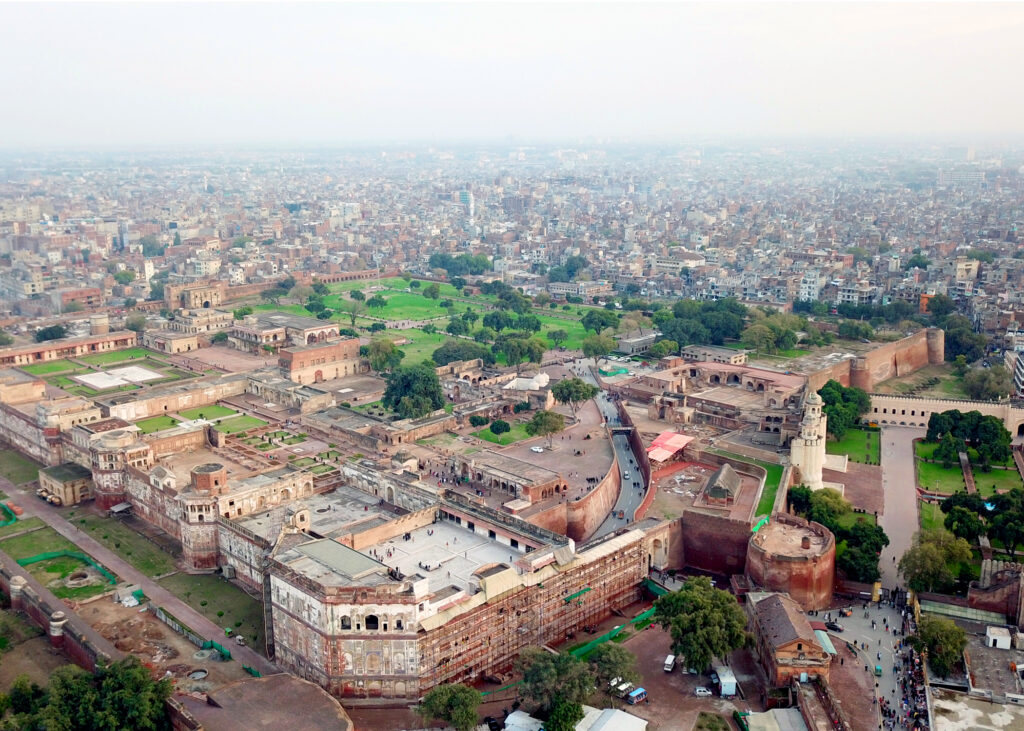
    Aerial Photograph of the Lahore Fort in Pakistan – Photographer Unknown

    The architecture housed in this Fort today represents the evolution of the Mughal Empire in the contributions made by four successive emperors in the dynasty. It represents the golden age of Islamic rule across Central and South Asia and how their individual philosophies have contributed to the arts and culture of modern day Pakistan and India.

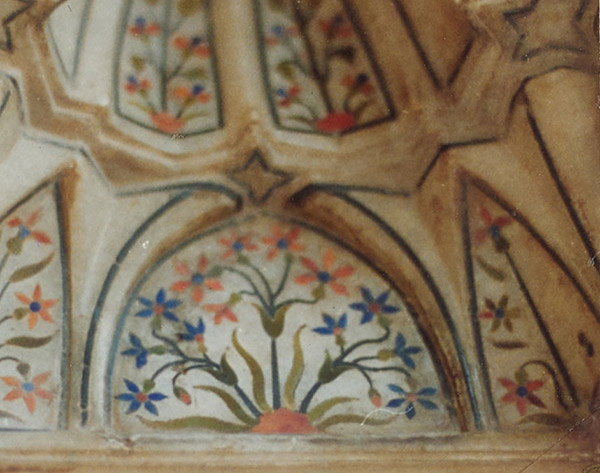
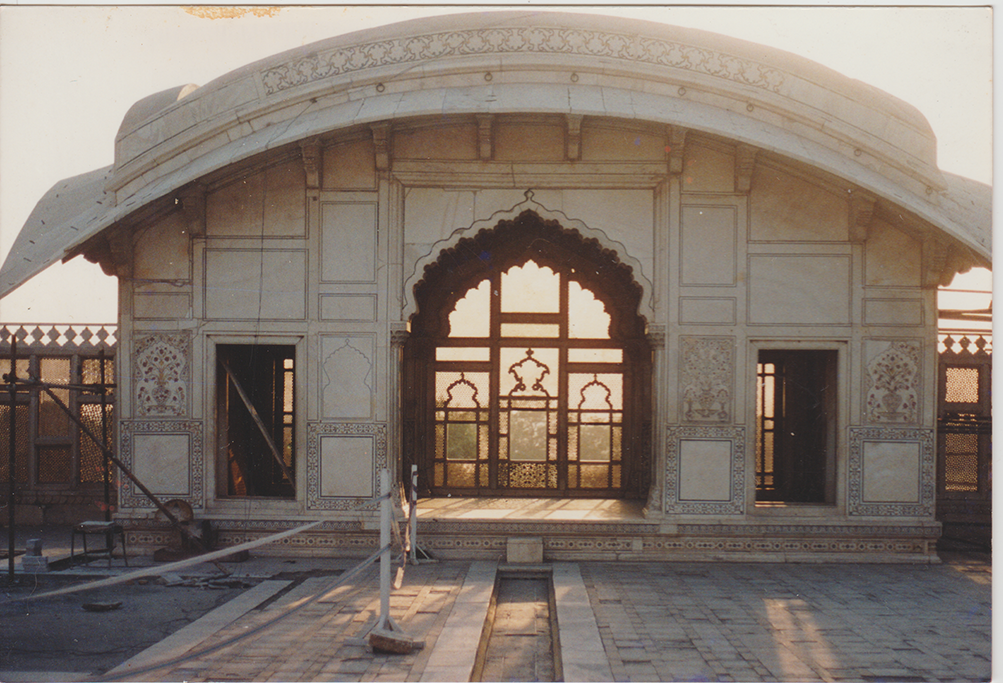
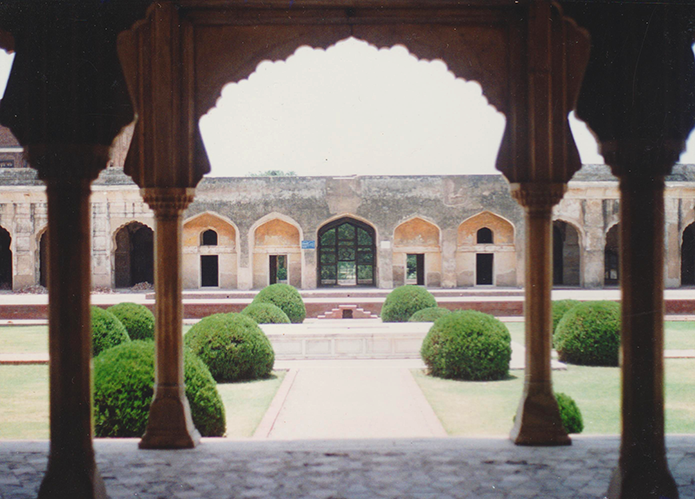
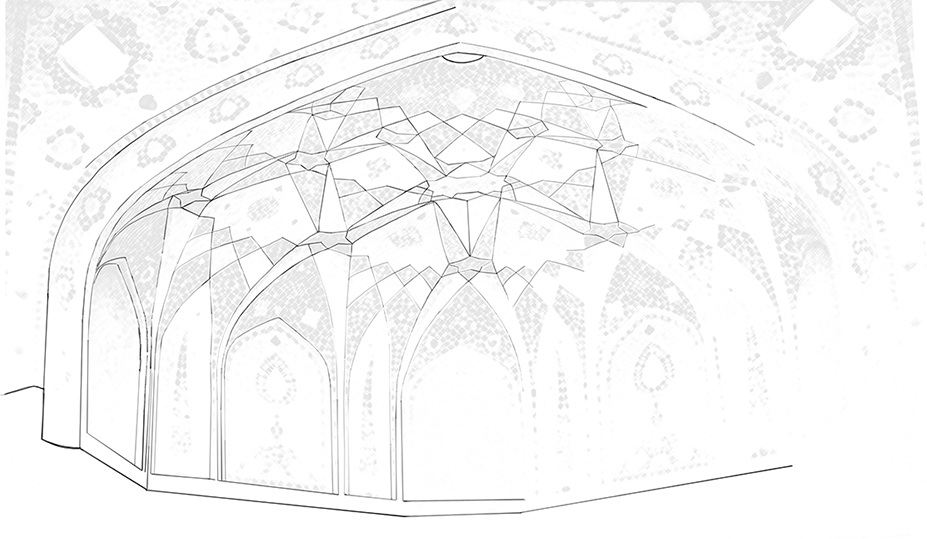
    The Mughal Emperor Akbar rebuilt the original Lahore Fort on a grander scale when he established Lahore as the capital of the Mughal Empire in 1566. A contemporary of the other great Mughal Forts in Delhi and Agra, this fort is equal in scale and design and house such architectural gems as the Shish Mahal (Palace of Mirrors), the Moti Masjid (Pearl Mosque) and the Naulakha, a marble pavilion studded with delicate pietra dura using semi-precious stones.

    The Naulakha Pavillion in The Lahore Fort – Photo by Atia Newman

    Perhaps most significant is the location of the Fort. In the historic city of Lahore, this Fort forms one side of a quadrangle, facing the iconic Baadshahi Mosque, with a Hindu Temple and a Sikh Temple placed between them. This shows how these Islamic emperors respected the right to personal religion, so much as to embed their beliefs into the layout of the capital of the Mughal Empire.

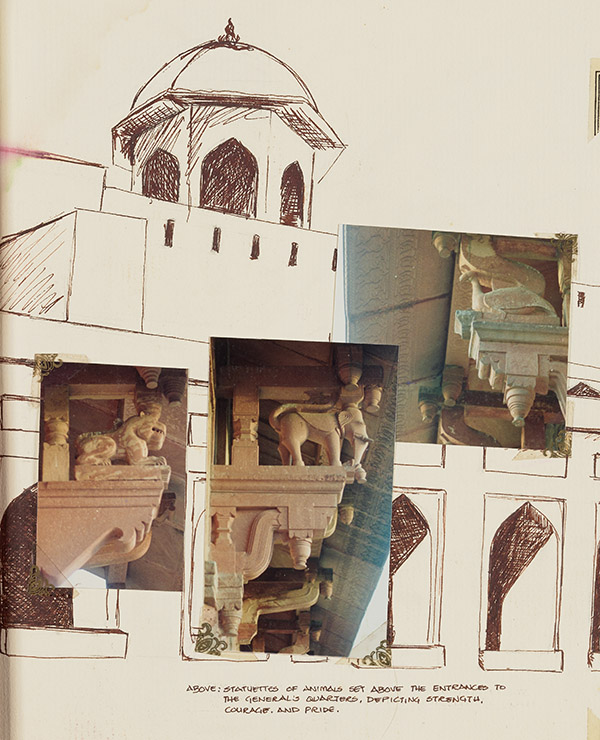
    The Emperor Akbar famously incorporated animal sculptures in the architecture of his General’s Quarters. His court policies were aimed toward creating an inclusive atmosphere for his non-Muslim generals, ministers and constituents.

    The Mughal Emperors lived fascinating lifes and represented varying degrees of fidelity to the religion. Yet, even across this range, each Emperor was consistent in their basic family values, respect for other cultures, and their unwavering support of the arts and education.

    In the era of the Mughal Empire, learning and culture were placed at the forefront. Some say that the literacy rate across the empire was as high as 90%, based on the number of people who could read Persian, Sanskrit, Hindi or Arabic. Perhaps unsurprisingly, mathematics was a universal skill across the subcontinent. However, all of these statistics were nullified after colonization, as the British did not consider non-English speakers to be literate at all. It was, sadly, this erasure of existing achievements that started the decline of the Muslim populations in India.

    The Lahore Fort was at the heart of the Mughal Empire for almost 150 years. Rediscovering this monument could provide us with new insights into the workings of the Empire that created such a lasting impact in the region. By reconnecting this past to our present, we can hope to start repairing the negative image of Muslims and Islam that exists today.

  • Introducing… The Lahore Fort 2.0

    Introducing… The Lahore Fort 2.0

    “Sometimes going back to the beginning is the only way.”
    ― Rachel Hauck, Once Upon a Prince

    After two decades of meandering through various art media and exploring a number of philosophical avenues, I seem to have come full circle back to a project that has suddenly evolved into a whole new animal. But before I can explain the what, I have to explain the why:

    I come from a culture that is, in many ways still trying to define itself. From the initial days of living the dream as the Land of the Pure to the almost immediate drop into harsh reality, Pakistan lost critical momentum in establishing the ideals for which it was created when we lost our Quaid-e-Azam (Father of the Nation). The subsequent years of experiencing extreme political interference from the Soviet Union and the US created a space where a number of competing factions attempted to gain a foothold, further destabilizing this fledgling dream.

    Having been raised outside of Pakistan, my teenage self struggled to find something great about Pakistan. My parent’s families were incredibly patriotic. They talked about the sacrifices that were made by millions, to be part of a country where Muslims could be safe and free. They dreamed of a country that lived up to the ideals that govern our religion: of education and logic and peace.
    They worked every day to uphold the values and live up to the ideals that Pakistan was made for.

    Yet outside of my home, all I saw around me was division and self-centeredness. Everyone judged each other on the basis of religion, sectarianism, economic status, beauty… it didn’t matter what. As long as you were a Pakistani in Pakistan, you were not good enough. This misery was further compounded by our history books and by the western media, which either couldn’t tell us apart from neighboring India, or, just called us backward terrorists. Torn between wanting to believe my parents and the prevalent negative narrative, I internalized the negativity. I figured my family was one of the few delusional families left that still tried to justify the creation of Pakistan.
    Everyone else knew better, so should I.

    Then, years ago, I wrote and illustrated a book that explored how the architecture of the Lahore Fort represented a visual evolution of the Mughal Empire in the 16th and 17th centuries.

    Obviously, this took me into new realms of research, beyond the cursory few paragraphs that cover the Mughal Empire in any schoolbook. My parents, (eternally supportive of our education), planned a trip to Lahore and arranged to grant me access to restricted areas of the Fort, so that I could see for myself, the scale and grandeur that my culture had left behind.
    It was a seminal experience for me to realize how impactful this empire was, and how much they revered art, music and education. How their philosophies upheld the teachings of Islam and represented the kind of respect that should be shown to those from other beliefs.

    The Mughal Empire holds a great significance in Pakistan, being the last Islamic Dynasty to rule this part of Asia before the British occupation in the 19th century. Unfortunately, much of what was created in this era was undermined as part of the British Divide and Rule policy, and this ridicule has been internalized and preserved in how Pakistan remembers its history today.

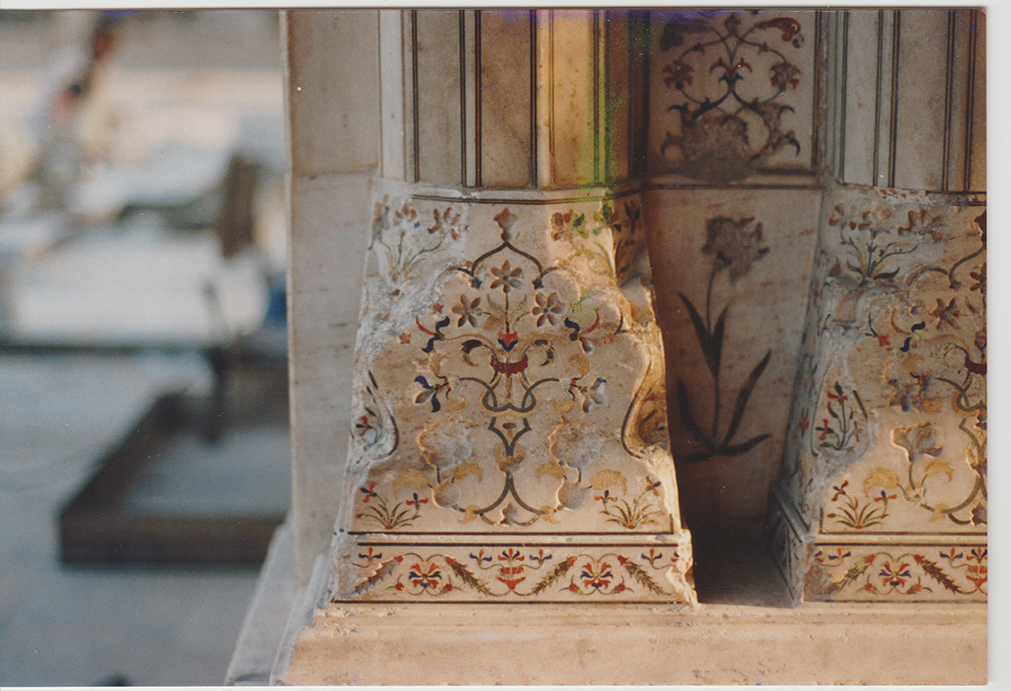
    In my talks with the guides and authorities tasked with managing this monument, I learned that the British Armies had looted and ravaged all the monuments of the Muslims when they took power. They stabled horses in the royal courts and gouged out jewels and semi-precious stones from the sides of buildings. They wanted to destroy us, and our people not just physically, but emotionally, and wipe away any claims to greatness that we might have.

    Pillar base from the Lahore Fort’s Naulakha from which semi-precious stones have been carved out.

    As many of our monuments from this era fall into further disrepair, our youth and public are further removed from their connection to the past. I was lucky, I had parents who were educated and dedicated to my success. They taught me to question the norm and instilled in me the principles and the strength to believe in myself. It took me years to crystallize this into a clear theory, but I got there.

    It is my own experience which makes me realize how important these monuments are. The lack of historical “ownership” and ignorance is what allows external negative portrayals to settle into the psyche of our youth. This increases incidences of extremism, lawlessness, a lack of empathy for their fellow man and an extreme lack of self-pride and civic sense. Without positive reinforcement, it’s easy to live down to everyone’s expectations and teens and young adults are the first to fall prey to such manipulations.

    The goal of the Lahore Fort Digital Preservation Project is to reclaim Pakistan’s historical narrative by re-examining our history and re-cataloging our historic sites. Using 3D digital visualization technology to do this, we aim to preserve and (virtually) restore the monuments of the Lahore Fort in a medium that will be attractive and accessible to all, especially our youth.
    For a population with an average age of 21.4, using an interactive gaming method to communicate with them seems obvious, almost mandatory.

    By bringing this project to Pakistan, I plan to train students of animation in the tools of virtual creation while simultaneously teaching them to understand and explore our past with an unbiased eye. By bringing CG colleagues with me, I hope to forge academic and professional relationships between Pakistan and the US. And, by publishing this, I hope to create a safe neutral space where Muslims (and non-Muslims) can learn more about these Islamic rulers, free of the preconceptions of western narratives.

    Now, more than ever, we need to create content that humanizes our culture and history. We need to create bridges to prevent the disturbing “otherization” that is occurring around the world and find ways to help cultures communicate. We need to actively undo the damange that was done to us and rediscover the best of us.

  • A Pivotal Exploration

    A Pivotal Exploration

    In an unexpected turn of events, it seems I cannot move forward with the Dynamic Addis.
    So I am redirecting current explorations and revisiting the graveyard of ideas and projects from my past.

    I’m sure every artist has one. The place where you keep those projects that were “finished” but never met your standards, or the great idea that didn’t fit the pitch outline, or a concept that was too big or too complex for that time and place.
    These ideas are saved on napkins, sketchbooks, notebooks… digital or analog, it doesn’t matter, because we have sparks like these a million times a day and the only hope of ever making them a reality is to save them for the right moment.

    This was one such moment. More than 20 years after the original research project, I have finally found the solution to my biggest peeve about my original presentation.

    Trying to present something like the Lahore Fort in a book form, with a selection of (comparatively) tiny photographs was the greatest limitation of that time.
    Now, years later, it finally hit me. I am no longer constricted by the size of a printable page, or a printable photograph.

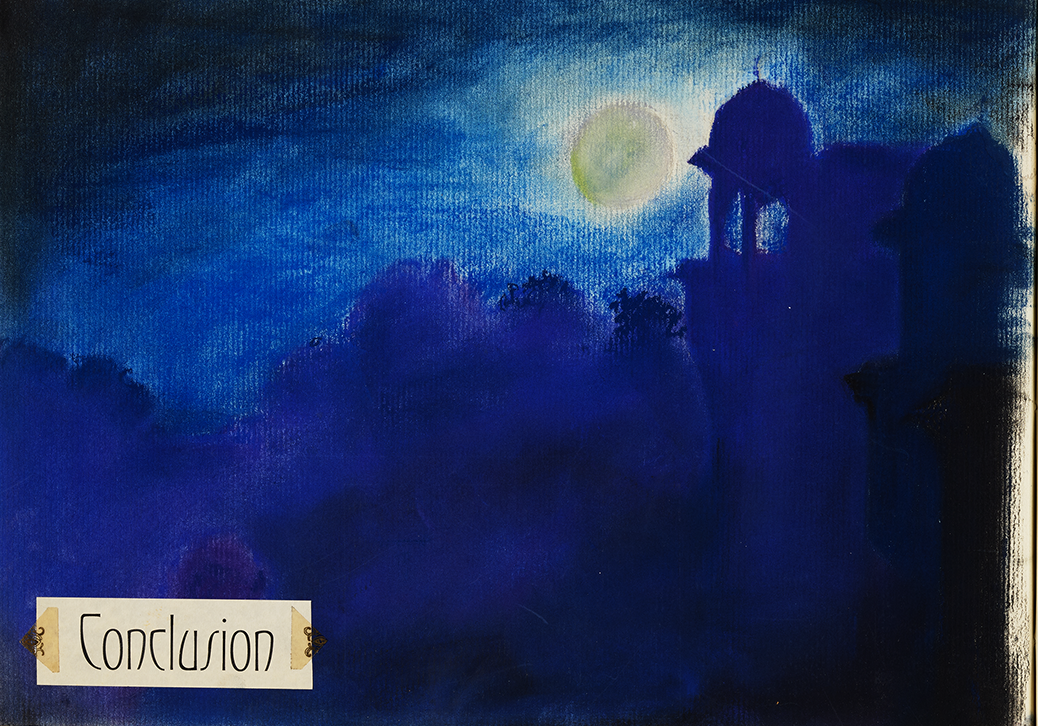
    A chapter-divider from my book on the Lahore Fort. Copyright Atia Quadri

    As an animator, I can present this world on a big screen.
    Even better, I can make it a 360 or VR space and really immerse my audiences into this experience!
    And what better time to do it, when the need for positive representation of Islamic cultures is at the forefront of every conversation!

    Working on this project was an eye-opening experience for my teenage self.
    I learned so much about my culture that was never taught in a classroom (and it should have been).

    Now, as an educator myself, I realize the onus is on me to educate the students of today.
    I have to remember that I cannot treat teaching like a job where I just demo some tools and call it a day.
    Teachers/Professors can make more than worker drones, they can create and nurture thinking, breathing human beings!
    And the only way to do that is to show them the possibilities and connect them to their past.

  • Cultural Appropriation vs Representation

    Cultural Appropriation vs Representation

    Cultural representation is fast becoming the Topic of the Century.

    Everywhere we look, we see calls for representation, inclusivity and diversity in media. This is such an important movement in our history because it is making people of all cultures aware of the invisible price they pay for not participating in a global conversation.

    To be fair, many cultures have not been allowed a seat at the story-telling, history-writing table. In fact, much of what we know about many cultures is knowledge assimilated and filtered through the lens of their colonizers and detractors. And only recently has it occurred to many of us to start questioning the sources that we gain information from.

    In fact, that is the primary crux of this post, because as we start to explore how to bring other races and cultures into the public eye, we see a growing backlash against filmmakers representing cultures that they themselves do not belong to.

    First, let’s be clear: Representation is important, because the world is made up of more than just a single race and that should be visible in all forms.

    However, it is important to remember that there is more than one valid point of view in the world. The way Representation falls into Appropriation is when one cultural point of view is co-opted and used to advance the theories and concepts of another culture. Sort of like how Colonialism works.

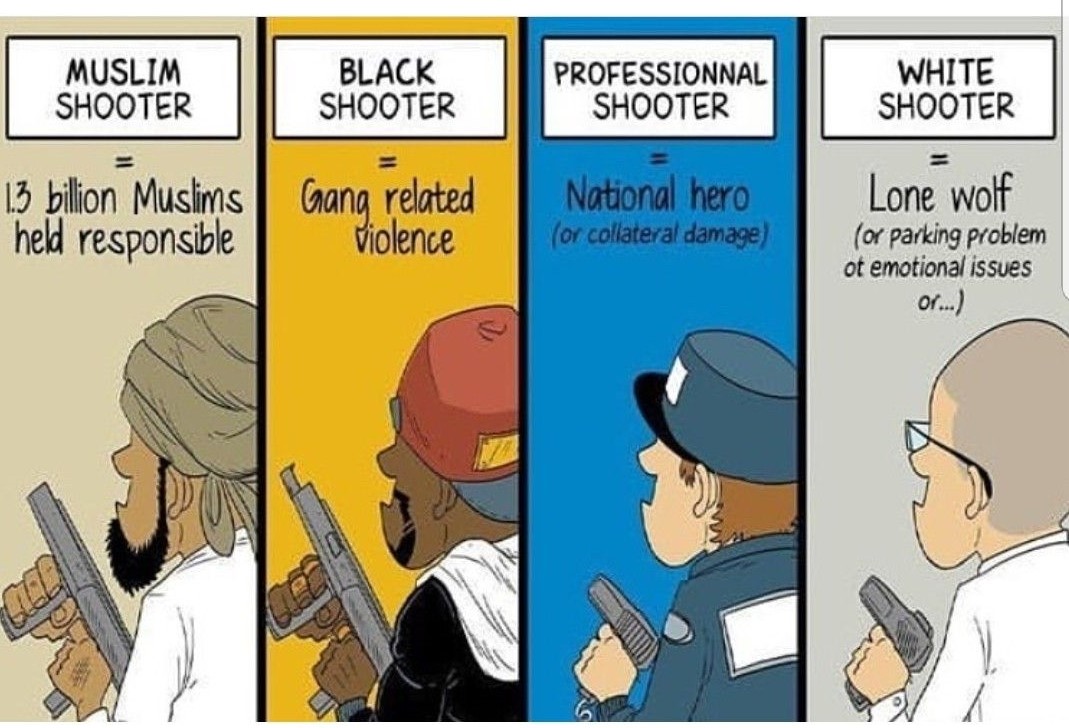
    Take, for example, Terrorism. Every decade since WW2 has brought us a new set of shows, movies and media that have held up and vilified individual cultures for a variety of reasons. The Germans are anti-semitic (or just evil incarnate), the Russians are conniving commies, the Japanese are crazed Kamikazes intent on world domination… so on and so forth. Since 9/11, it has been the Arabs and the Muslim world being represented as misogynist haters of all things good in the world.

    This means, that even though each of these cultures is/was “Represented” in media, their culture is appropriated in a manner that makes them look bad, and promotes the prevailing theory of the time that the entire race is evil. Let’s remember that one man’s terrorist is very likely another man’s hero, and that these labels are entirely subjective.

    Does that mean that a Director cannot make a film about anything other than their own demographic? Dear Heavens NO! It also doesn’t mean that Directors cannot criticize any culture other than their own either!

    The real issue with Appropriation is not about who makes it, but rather, about how arbitrarily they Represent the other culture.

    And it might be easy to say “hey, there are a bunch of movies/shows/stories out there that completely vilify white culture too”. Except for the fact that there is such a high volume of work that represents such a variety of white culture and ideologies, that any negative representation is tempered by the many works that add nuance and compassion for said culture.

    This is true of Indian cinema too, which is an industry that regularly produces the highest number of films per year. There is such a high degree of representation of Indian culture in the world, it is hard to imagine Indians being vilified with a shallow label.

    To add insult to unfair representation; artists and filmmakers from underrepresented cultures are often encouraged to create work that reinforces existing negative stereotypes. It is tough to pitch a “heartwarming coming of age story” in an alternate culture without being told that there isn’t really a market for such rosy drivel. No, because nobody is willing to imagine that a happy story can exist in the burnt tundras of desert dwellers or that happiness can exist in an imperfect world. So the only artists who get funding and global attention are the ones who trade on their identities for a shot at fame. After all, any representation is better than none, right?

    That is the insidious nature of economically-dependent art. Toiling away in obscurity can feel like a jail sentence, and after a while, it becomes easier and easier to adapt your vision to start appealing to the masses. Yet, artists must realize they are not just representatives of culture, they are responsible for educating society of the ideals that they want to live up to. Artists can build bridges and bring hope and empathy into the world. But if we bind them with restrictions in the name of progress, even in the name of diversity, we are doing them a disservice.

    It doesn’t matter who makes the art, it matters how they make it. Do they care about the culture they represent? Do they know enough about the culture to call it out? Is it fair to use their art to tar and feather an entire culture? When it comes to underrepresented cultures, Art has to bring perspective to a conversation, not rely on sad, one-line cliches and unremitting criticism.

    There is a lot more to Appropriation than just the terrible misrepresentation of cultures in mainstream media and in art. But this is not a topic that can be summarized in a nutshell. We see Appropriation across the gamut, in fashion, design, music and literature. It is insidious in how quietly it can sneak up on a person, and the best way to fight it is to expand the conversation and move it past the limited description of who made it. Let’s include the why and wherefor and really start looking at whether our art is helping or hurting another.

  • The Broken Line of Productivity

    The Broken Line of Productivity

    The videos are starting to come up, and the art work is building. I’m super excited and at the same time I feel like I should be producing more. I’ll get there, I always do, but it’s interesting how the productivity graph is never a nice, predictable line.

    Some of this must be from having grown up in Pakistan. I can’t remember a time when my life wasn’t interrupted by “real life”. Things like, sitting down for a geography exam, only to have it interrupted by an emergency evacuation because a bomb threat was called in. Or, trying to meet a deadline when monsoon season hits. Two days of rain and 5 days without electricity can really hamper productivity, and yet, Karachi manages to prevail against all odds. Karachiites prevail, in spite of the broken infrastructure, the violence, the heavily intertwined social lives that demand that you stop and care for your loved ones no matter what.

    The idea that a person can work “no matter what” is an unrealistic and soul-destroying concept, because we are not robots, and no amount of discipline can make us that way. The trick here, is to find that organic way of working so that all the work that needs to be done, gets done.

    This is what I’ve been forced to discover since Oct 1st. Good news though, I’ve actually still managed to do things. Bad news, I haven’t recorded it as well.

    But that’s okay! Nobody can do everything all the time. Staying realistic is the best way to ensure productivity through an extended period of time. And, breaks are important.
    As quite a few people have reminded me, I’ve been going a 101 mph since 2012, and I need this sabbatical. Not only to kickstart my work towards a new set of research goals, but also to reboot my creative self so I can be enthusiastic and not crazy.

  • History’s Winners and Losers

    History’s Winners and Losers

    If history is written by the “winners”, then where do the “losers” go to discover their past? Identity cannot be created/felt/experienced without a true understanding of one’s past, and if the past is brutally slanted against you, your only recourse is to internalize that loathing and damage yourself in every way possible.

    As a teenager, I lived through one of the bloodiest periods of Pakistani history. Sectarian violence was rife, internal divisions were tearing the country apart, and 90% of the population was illiterate and closed to reason, logic and even common sense. In 1996, more people died in Karachi than in Bosnia and Kashmir combined. The kind of impact it made on the psyche of the country as it witnessed this trauma is still largely unrecorded. The impact of this era is still visible in the behaviour of our people today.

    My artistic career has been marked by multiple moments that have revealed small parts of this puzzle to me at different times. As a pre-college teen, I wrote a 4,500-word dissertation (with accompanying illustrations) that led me to research one of the most influential Dynasty that ruled the sub-continent in the 4 centuries leading up to British occupation. As a senior in college, created a fantastical story based on a pivotal war between India and Pakistan, that is often mischaracterized in history as a loss for Pakistan. It was there that my research led me to speak to people who had actually lived that history, and it made me realize how long our history books could be. From interviews with people who actually fought on the frontline, to talking to people who had been government officials at the time, or witnessed firsthand the unfolding of said war, I was able to piece a compelling story that was made more exciting when I added a dollop of magic into it.

    Fast-forward through a decade of my career progression: I moved to the US, earned a terminal degree and became a professor of animation. It was in my tenure-track progress that I was approached to help create a story for our local Seneca Nation based in upstate NY. We were commissioned to create an authentic representation of their story of creation, so that their youth would not lose touch with their religious beliefs. The Iroquois Creation story was created with characters designed to resemble actual tribes-members, with sound actors who were Native Americans who spoke with a “pure” accent.
    The soundtrack was composed by an award-winning Native composer and featured live-action segments of actual dance rituals.
    The ICS went on to show in almost 20 festivals, with 6 wins as best animation and many, many accolades for the soundtrack.
    It was this film that reignited my previous confusions/angst about history, and the process of recording it. It occurred to me that my own mixed feelings about being a Muslim woman from Pakistan may have something to do with how my country is perceived and portrayed in the world. It also occurred to me that I may be in a unique position to actually change my conflicted self-narrative if I were to actually participate in the writing of the history of my people and my country, like the Haudenosaunee did with the Iroquois Creation Story.

    My research led me to the writings of multiple scholars, most notably Sheryl Brown Graves, in the Journal of Social Issues:

    “Television programming provides information about social groups in two ways: by inclusion and by
    exclusion. When diverse groups are included, television content offers specific examples of the
    physical, psychological, social, cultural, and economic characteristics of each group. However when
    groups are absent from the television curriculums there is implication that the missing groups are
    unimportant, inconsequential, and Powerless. Both types of information can contribute to the
    development, maintenance, and modification of children’s thoughts, feelings, and actions towards
    racial/ethnic groups.”

    The idea that childrens’ programming can essentially direct racial and ethnic divisions and sow the seeds of future dissent is scary. Not only are “mainstream” races taught to be suspicious of the “unusual”, but the non-represented classes are taught to inherently see themselves as the enemy, or “the others” too.
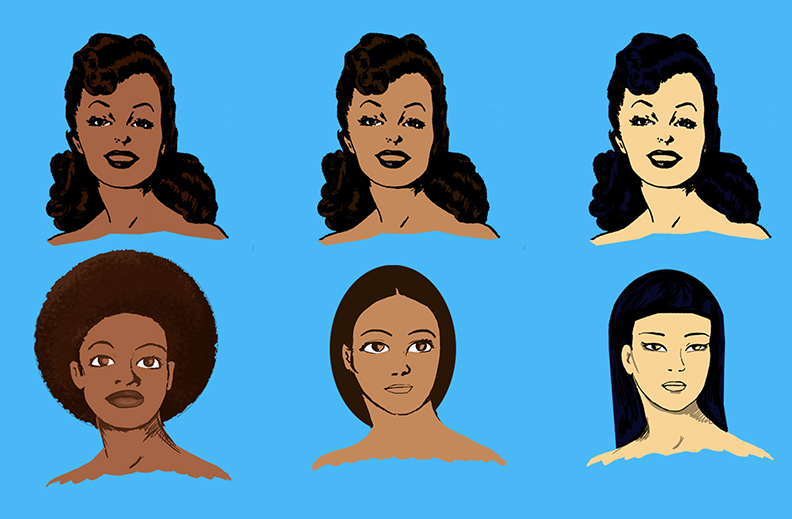
    In an attempt to consciously combat this disparity in “pre-programming” ideology, I co-created a project called The Character Mosaic Project. The goal was simple: create a variety of interesting and authentic characters of color, build them and distribute them to young and independent filmmakers, thereby enabling the less technically inclined to tell their animated stories. We felt that making these characters would allow artists with fewer resources to present their ideas and essentially help to even out the playing field. It may also spark other, bigger production houses to put more care into how they build their own casts in future films.

    Yet, as I worked on Character Mosaic, I found myself impatient to write my own story and talk about my own culture. I’d spent so long waiting for a Pakistani filmmaker/writer/artist to present us in a way that shows us in a good light… and I suddenly understood what my professional mentors have always told me. “Make the film you want to see.”

    Well, I’m not going to wait for another filmmaker/artist to come along, I’m not a helpless princess waiting to be rescued. I want to embrace my life, my culture and my history, to see my warts, but also to see my own beauty, because, I think, that is the only way I can truly thrive.

    So I’ll save my own damn self. And maybe encourage others to follow suit!

  • Schedule

    Getting through a pile of research in a pre-defined amount of time feels much like planning and completing a thesis project, but with more grown-up end results. After all, a sabbatical is designed to allow a faculty member to refresh their knowledge, develop new ideas and create in ways that cannot be done around the full-time job of teaching and participating in the management and smooth running of a university.

    Except today is the 20th of June, and I find myself a month out from finishing one of the strangest semesters ever, because we are in the middle of a global pandemic and have been confined to our homes since March. This odd situation has brought about the strange effect of being stuck in a no-man’s land, where time has no meaning and days can tick by in a strange expectation of “when will we be normal again?”.

    Since I can’t answer that question, and I can’t allow myself to waste this gift of time that I have gotten, I am going to instill a rough, daily schedule for myself, based on the off-habits that have been created in the past two months.

    Sep 1st Update: Who are we kidding?? This schedule lasted about a week and then everything went to hell. My new schedule has evolved, much as my learning process has. I think this makes sense, because it’s one thing to plan a schedule when you know what you’re doing. As an animator, I know how I work and can plan accordingly, but it has been at least 10 years since I was in class, or learning like a total noob (pardon the netspeak). So I’ll post a new update on my schedule in the am. Right now, it’s midnight and I’m making myself sleep early nowadays!

    TimeActivity
    9 amearly morning sketches
    10 amtending to house and back yard
    11 am – 1pmReading and writing (plus any meetings)
    1 pm – 4pm3D building/ digital creation
    4 pm – 9pmHours flexed between creation or research.
    (insert) 7 or 8 pmEvening walk/ biking etc
    11:30 pmUpdating the blog
    In bedReading a book (not electronically)

    Now, I’m not planning to make this a stressful experience for myself. I know life will force this schedule to change, and there will even be some days when I do nothing. However, I’m not at crunch-time right now, and I think if I play this right, I should never get into crunch mode. (Or at least I can avoid super-crunch, right?)

    The way I see it, maintaining a general guide for myself will keep me from whittering entire days on doodles, or full days on tutorials and force me to stay mindful of my progress.

  • Introducing Myself

    Animator, professor, nerd-who-likes-to-learn-about-anything.

    I was a happy nerd in school, accepted by my peers, active in drama, debate, art contests, student government and (for a short time) track and field. I loved art, I loved physics, and I loved math.

    As a teenager planning my college applications, I agonized over which route to take: science, or art. Having Pakistani parents, I faced the usual pressure to either follow in my parents’ footsteps (engineer or teacher) OR I could become a doctor, because medicine is the most important field!

    Anyway, long story short, my parents dealt with the disappointment of my rejecting a “respectable” career in favor of following my instincts. In fact, they soon became my biggest fans and bragged about their animator daughter every chance they got.

    I discovered animation at the end of my schooling at NCA, mostly because I felt constrained by single images. I wanted to create motion, and stories, and worlds. I imagined making the Pakistani version of Disney, and building a library of the amazing stories that represented me, and people like me.

    Strangely enough, I feel like I have been working toward that goal for the past 20 years, despite having moved to the US, shifting into an academic career and building a whole new life in my adopted country.

    And this, this is my sabbatical, where I think I am going to learn a lot, but I think I will finally get to build a story that shows the quirky, happy side of where I came from.