It makes no sense to learn a program or build a new workflow without first creating an idea that you want to implement it on. After all, a theory is no good unless it has been tested and proven in some way. And what better way to establish a good workflow than to throw it into the deep end?
Visualizing two Pakistani characters.
I’ve been playing around with ideas of your typical desi (it’s a real term) women and seeing what I can create and how I can possibly stylize them. These are early concepts, so I doubt they’ll actually exist in this exact form, however, I do want to explore this style for some future idea.
Naturally, creating a natural habitat for them has been fun too, especially because I get to be all nostalgic about my old haunts during my school years. This is something I loved about my teens, nobody seemed to care where we went as long as we came back safe and sound. Maybe it’s like those memes about how 80’s parents never cared about their kids, and now we can’t get away from helicopter parents. But I’d like to think that life could get there again. After all, neighborhoods are created by people, and if we work to make our neighborhoods safe, then why wouldn’t our kids find fun places to go hang out, drink some chai and shoot the breeze with friends?
Not any specific location, but every Karachiite on the planet should have a moment of nostalgia looking at this drawing. All that’s missing is a stray cat and some guy handing out tea.
Practice is essential in the process of learning a new software. Now that I’ve been working in Blender more regularly, I am finding it easier to think like the software needs me to, and my internal Maya rumblings are being pushed further out of focus, so I can create with fewer hiccups.
Still relying heavily on the Blender Guru for learning. It’s totally worth a look!
There are still a few things I’m having trouble with, and I assume a lot of this is because I don’t feel fully acquainted with Blender yet. The biggest questions for me are: why can’t we find construction history on objects? Or modify them once we’ve clicked away from the initial creation? And! Why are we okay leaving massive ngons sitting around on these objects??
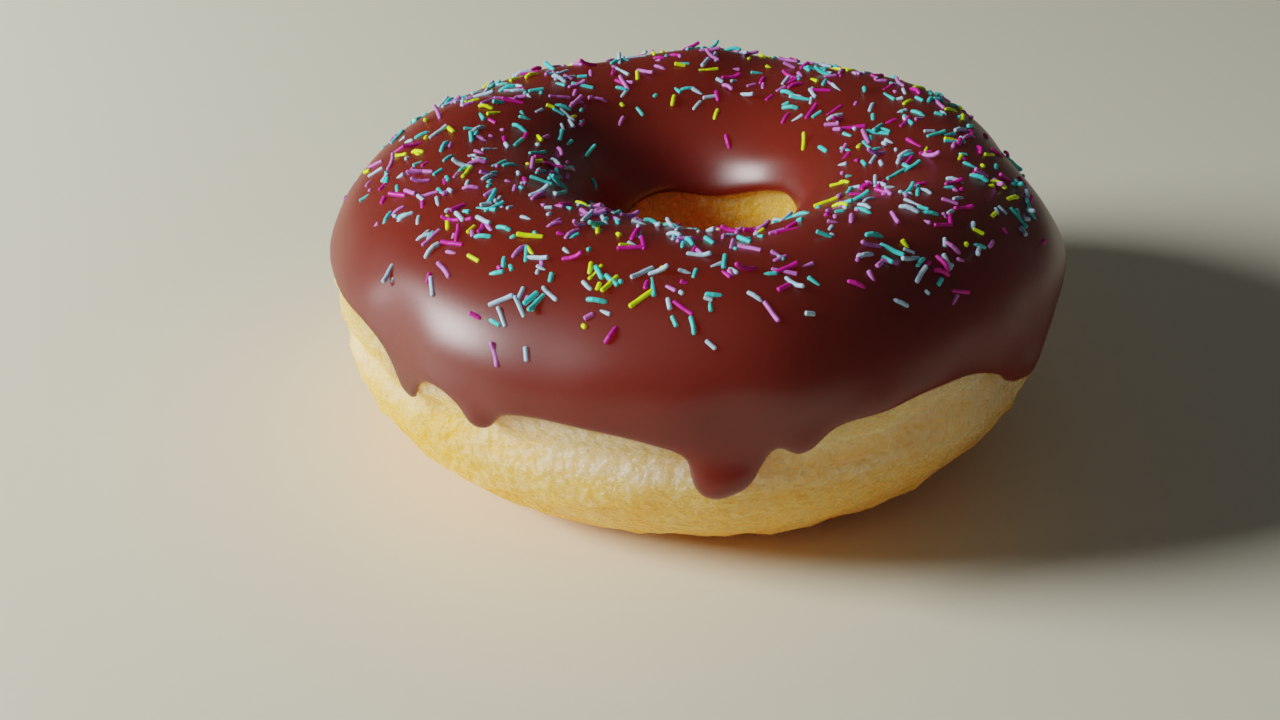
But! The nice thing about each of these tutorials is that we do get a good look at how powerful and effective Blender’s tools are. Maya would never allow me to set up a volume density for a fluid effect without creating all manner of rendering trauma, and this was a super easy process here. That, plus the fact that I could use particles to create sprinkles on the donut makes me really glad to be following this tutorial series.
Yesterday’s final result was quick and very fun. And even though there is more to go, I can see how manageable this would make a production… as long as you know what you’re doing!A little bit of condesation added to make it look like the coffee has cooled. PS, I drink my coffee hot!
If history is written by the “winners”, then where do the “losers” go to discover their past? Identity cannot be created/felt/experienced without a true understanding of one’s past, and if the past is brutally slanted against you, your only recourse is to internalize that loathing and damage yourself in every way possible.
As a teenager, I lived through one of the bloodiest periods of Pakistani history. Sectarian violence was rife, internal divisions were tearing the country apart, and 90% of the population was illiterate and closed to reason, logic and even common sense. In 1996, more people died in Karachi than in Bosnia and Kashmir combined. The kind of impact it made on the psyche of the country as it witnessed this trauma is still largely unrecorded. The impact of this era is still visible in the behaviour of our people today.
My artistic career has been marked by multiple moments that have revealed small parts of this puzzle to me at different times. As a pre-college teen, I wrote a 4,500-word dissertation (with accompanying illustrations) that led me to research one of the most influential Dynasty that ruled the sub-continent in the 4 centuries leading up to British occupation. As a senior in college, created a fantastical story based on a pivotal war between India and Pakistan, that is often mischaracterized in history as a loss for Pakistan. It was there that my research led me to speak to people who had actually lived that history, and it made me realize how long our history books could be. From interviews with people who actually fought on the frontline, to talking to people who had been government officials at the time, or witnessed firsthand the unfolding of said war, I was able to piece a compelling story that was made more exciting when I added a dollop of magic into it.
Fast-forward through a decade of my career progression: I moved to the US, earned a terminal degree and became a professor of animation. It was in my tenure-track progress that I was approached to help create a story for our local Seneca Nation based in upstate NY. We were commissioned to create an authentic representation of their story of creation, so that their youth would not lose touch with their religious beliefs. The Iroquois Creation story was created with characters designed to resemble actual tribes-members, with sound actors who were Native Americans who spoke with a “pure” accent. The soundtrack was composed by an award-winning Native composer and featured live-action segments of actual dance rituals. The ICS went on to show in almost 20 festivals, with 6 wins as best animation and many, many accolades for the soundtrack. It was this film that reignited my previous confusions/angst about history, and the process of recording it. It occurred to me that my own mixed feelings about being a Muslim woman from Pakistan may have something to do with how my country is perceived and portrayed in the world. It also occurred to me that I may be in a unique position to actually change my conflicted self-narrative if I were to actually participate in the writing of the history of my people and my country, like the Haudenosaunee did with the Iroquois Creation Story.
My research led me to the writings of multiple scholars, most notably Sheryl Brown Graves, in the Journal of Social Issues:
“Television programming provides information about social groups in two ways: by inclusion and by exclusion. When diverse groups are included, television content offers specific examples of the physical, psychological, social, cultural, and economic characteristics of each group. However when groups are absent from the television curriculums there is implication that the missing groups are unimportant, inconsequential, and Powerless. Both types of information can contribute to the development, maintenance, and modification of children’s thoughts, feelings, and actions towards racial/ethnic groups.”
The idea that childrens’ programming can essentially direct racial and ethnic divisions and sow the seeds of future dissent is scary. Not only are “mainstream” races taught to be suspicious of the “unusual”, but the non-represented classes are taught to inherently see themselves as the enemy, or “the others” too. In an attempt to consciously combat this disparity in “pre-programming” ideology, I co-created a project called The Character Mosaic Project. The goal was simple: create a variety of interesting and authentic characters of color, build them and distribute them to young and independent filmmakers, thereby enabling the less technically inclined to tell their animated stories. We felt that making these characters would allow artists with fewer resources to present their ideas and essentially help to even out the playing field. It may also spark other, bigger production houses to put more care into how they build their own casts in future films.
Yet, as I worked on Character Mosaic, I found myself impatient to write my own story and talk about my own culture. I’d spent so long waiting for a Pakistani filmmaker/writer/artist to present us in a way that shows us in a good light… and I suddenly understood what my professional mentors have always told me. “Make the film you want to see.”
Well, I’m not going to wait for another filmmaker/artist to come along, I’m not a helpless princess waiting to be rescued. I want to embrace my life, my culture and my history, to see my warts, but also to see my own beauty, because, I think, that is the only way I can truly thrive.
So I’ll save my own damn self. And maybe encourage others to follow suit!
I’ve been putzing around in Blender for a while but of course, it’s hard to get good at anything without practice. So, I decided to go out and find a few tutorials on the web to lead me through some basic exercises and really help me find the buttons.
I found this great series by the Blender Guru on YouTube (with a name like that, how could we go wrong?) and I love the donut tutorial, because it really helped me subvert my Maya instincts into usable Blender skills.
I’m happy to say, I’ve been getting tangible results, and! I found corresponding hotkeys for specific functions that I was otherwise struggling to locate. Thank you Blender Guru!
Weekend update: Got further into the tutorials, and started making sense of texturing and look-dev.
Getting through a pile of research in a pre-defined amount of time feels much like planning and completing a thesis project, but with more grown-up end results. After all, a sabbatical is designed to allow a faculty member to refresh their knowledge, develop new ideas and create in ways that cannot be done around the full-time job of teaching and participating in the management and smooth running of a university.
Except today is the 20th of June, and I find myself a month out from finishing one of the strangest semesters ever, because we are in the middle of a global pandemic and have been confined to our homes since March. This odd situation has brought about the strange effect of being stuck in a no-man’s land, where time has no meaning and days can tick by in a strange expectation of “when will we be normal again?”.
Since I can’t answer that question, and I can’t allow myself to waste this gift of time that I have gotten, I am going to instill a rough, daily schedule for myself, based on the off-habits that have been created in the past two months.
Sep 1st Update: Who are we kidding?? This schedule lasted about a week and then everything went to hell. My new schedule has evolved, much as my learning process has. I think this makes sense, because it’s one thing to plan a schedule when you know what you’re doing. As an animator, I know how I work and can plan accordingly, but it has been at least 10 years since I was in class, or learning like a total noob (pardon the netspeak). So I’ll post a new update on my schedule in the am. Right now, it’s midnight and I’m making myself sleep early nowadays!
Time
Activity
9 am
early morning sketches
10 am
tending to house and back yard
11 am – 1pm
Reading and writing (plus any meetings)
1 pm – 4pm
3D building/ digital creation
4 pm – 9pm
Hours flexed between creation or research.
(insert) 7 or 8 pm
Evening walk/ biking etc
11:30 pm
Updating the blog
In bed
Reading a book (not electronically)
Now, I’m not planning to make this a stressful experience for myself. I know life will force this schedule to change, and there will even be some days when I do nothing. However, I’m not at crunch-time right now, and I think if I play this right, I should never get into crunch mode. (Or at least I can avoid super-crunch, right?)
The way I see it, maintaining a general guide for myself will keep me from whittering entire days on doodles, or full days on tutorials and force me to stay mindful of my progress.
Animator, professor, nerd-who-likes-to-learn-about-anything.
I was a happy nerd in school, accepted by my peers, active in drama, debate, art contests, student government and (for a short time) track and field. I loved art, I loved physics, and I loved math.
As a teenager planning my college applications, I agonized over which route to take: science, or art. Having Pakistani parents, I faced the usual pressure to either follow in my parents’ footsteps (engineer or teacher) OR I could become a doctor, because medicine is the most important field!
Anyway, long story short, my parents dealt with the disappointment of my rejecting a “respectable” career in favor of following my instincts. In fact, they soon became my biggest fans and bragged about their animator daughter every chance they got.
I discovered animation at the end of my schooling at NCA, mostly because I felt constrained by single images. I wanted to create motion, and stories, and worlds. I imagined making the Pakistani version of Disney, and building a library of the amazing stories that represented me, and people like me.
Strangely enough, I feel like I have been working toward that goal for the past 20 years, despite having moved to the US, shifting into an academic career and building a whole new life in my adopted country.
And this, this is my sabbatical, where I think I am going to learn a lot, but I think I will finally get to build a story that shows the quirky, happy side of where I came from.
Okay, so I’ve been looking at Blender for a week or so. Doing nothing major, just finding tools, discovering features and watching tutorials.
The first thing I discovered: it was a big mistake to choose “industry” settings for short keys, because it seems to remove just about every short key that is not universally known across other 3D software.
So, while I have basic navigation, basic tools and access to component modes, etc, there is no good way to access things like “last tool used” and “repeat last action”. And here’s the kicker: undo is ctrl+z, not just z.
Otherwise, the modeling layout is not too difficult to manage. My modeling time doubled from the lack of short keys, and was further compounded by the ctrl+z issue (hey, it really throws you off!).
Ironically, that was when watching tutorials really blew my Maya-modeling mind away. There are way more “tricks” and tools to help model objects than in Maya. Oh, I know, Maya has been prettying up the modeling process for years, but it’s not Maya’s real concern in life, and sadly, it shows.
In this age of COVID-19, I suddenly remembered the commercial animated series, Commander Safeguard. He taught children (and adults) about the importance of hand-washing, and made people understand that even though germs were invisible, they could still wreak a lot of havoc in our lives.
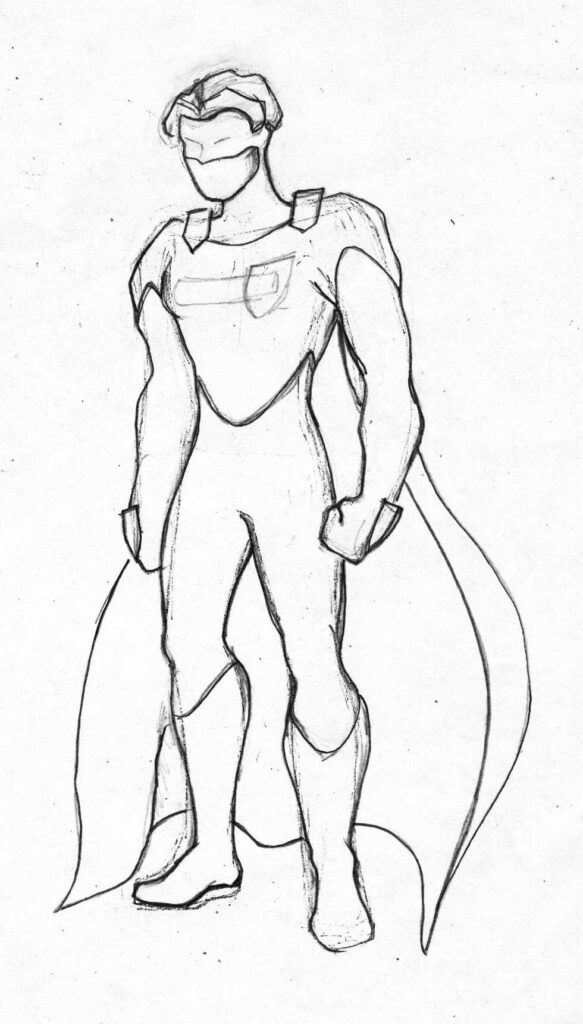
It has been years since I have been a part of this team, but seeing this reminds me of his very humble beginnings. The first script for this show languished for years in the desk of an ad agency. I was given the outline when I was interning with them and, being the comic-enthusiast that I am, could not resist putting together the earliest designs for his look.
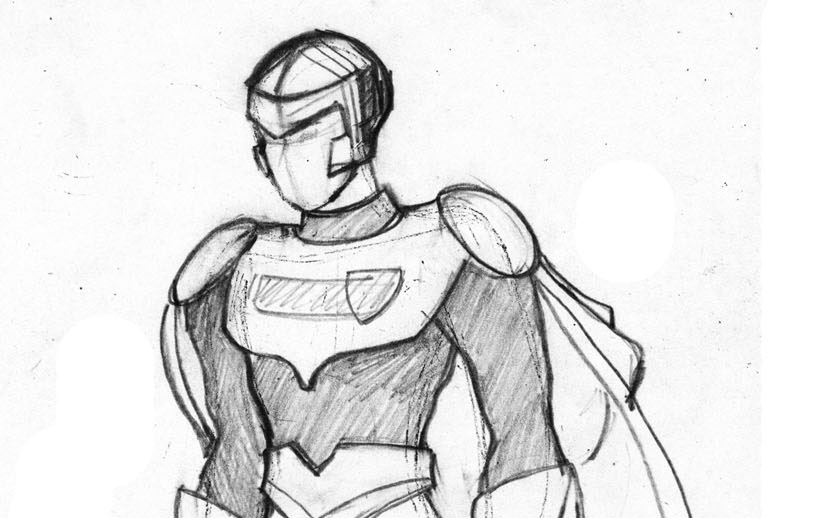
The first few ideas of how Commander Safeguard might look
His design passed through many iterations, and apparently quite a few committee approvals. Nevertheless, this is what came of it. I did not have a hand in his final design, but I did enjoy getting to animate the living daylights out of him!
I seemed to have been quite obsessed with cultural research as a teen/young adult. I recently discovered a leather-bound book that contained my 4500 word dissertation for school, based on the architecture of the Mughal Empire.
This was such an exciting project for me, I remember my mom and I traveled to Lahore (we live in Karachi) and visited the famous Lahore Fort, Badshaahi Masjid and got permission to photograph even some restricted areas. Discovering it in my mom’s things after 20 years has certainly been wonderful!
This book has taken a beating!Each Chapter began with a sort of “centerfold” pull out, in an attempt to show the grand size and scale of these monuments.
In the 90s, I was a teenager who had lived in two other countries before my family moved us back to the motherland. Sadly there was no positive image of Pakistan for me to adopt. The country was wrapping up a decade-long military dictatorship, and the new seeds of democracy were nothing more than a farce enacted to pacify global leaders and coerce external funding that would ultimately be stolen by our very corrupt politicians.
Researching this project became such a rewarding experience, because learning that I was part of a culture that was able to create something of lasting beauty, gave me hope for the future.
Now, years later, it occurs to me that this might be why History is such an important subject for young people, because how can you imagine future success without some sort of proof that someone like you succeeded in the past?
Some of the craziest stuff comes out when you start digging through old hard drives! I have always been especially sad that I never realized the importance of cataloging my art until I moved to the US. It felt a lot like my entire career in Pakistan was wiped out because I never built demoreels or saved rendered, hi-res samples of my work there.
Shock of all shocks! I discovered this small folder of old playblasts (rough, work-in-progress animation files) of the animations I did for Dungeon Lords! Obviously, these are not the final rendered pieces, and I think stuff may have been polished past these renditions, but how nice to see something!