My Lahore Fort digital preservation project is continuing to evolve and spark new results. I am refining my techniques and cementing the method that will serve as the foundation of this project.
When my pilot project, the Shed Game wrapped up, my students coined the phrase “Interactive Digital Preservation” as a way to represent the uniqueness of my proposed method. My second adventure in prototyping spawned the name to “Digital Interactive Preservation”.
This was a humorous nod to our RIT Cultural Heritage Imaging and Preservation Research group, internally referred to as “CHIPR”. It just seemed fitting to have a “DIP” to go with the “CHIP” research group. After all, it’s through this group that I met my architectural collaborator and Co-PI, Dr Alissa De Wit-Paul, and it’s through this group that we have been able to present separately and together on the matter of digital preservation around the world.
As I balance my sheets from my previous grant, I am happy to note my progress. With the site scans, I now have a clear roadmap for steps and resource-management. These tests have also reinforced the need to bring back the original teaching/educational component back into the process. The core goal is and always has been to share this technique with as many people as possible and enable a broad-scale effort to preserve history from all corners of the globe. Making it cost less (than the standard physical and digital methods) and use more accessible skills (art, architecture and analysis) is more impactful in the long run.
The DIP method stands to engage local communities in the process of preserving their own history. It provides smart people with the ability to engage in meaningful work that bolsters their own communities. These people will act as witnesses to the cultural sites of their own ancestors, saving in written and pictorial form key elements and put their knowledge in a place where it can be shared far and wide. This method gives them the agency to control their own cultural narratives, because they’re not relying on others to tell them what their heritage means. Most importantly, it allows them to share their culture with others in a way that takes into account their unique cultural point of view.
As someone who has always balanced multiple identities, I have refined the art of translating values and ideas from one mode to another. Ultimately, all cultures and people start from the same place of idealism. Everyone believes in truth, honesty and goodness; they just have different ways of expressing themselves.
By revisiting our historical narratives, we can remove the barriers to communication and lay the foundations for the rich variety of human creativity that the world has to offer.
After three years as Chair of the RIT Faculty Senate, I have come away with a treasure trove of insights, realizations and strategic understanding. Leadership, as experienced and viewed close-up from this role has taught me so much, I have spent the past 6 months simply processing everything, trying to find the words to make sense of everything.
The first thing to discuss is how aptly the term “drinking from a fire hose” fits when describing a high-pressure, high information role like this one. As a relatively junior faculty member (in my brain, I’m still a teenager), I went from an abstract understanding of how a university functions to… feeling the need to understand and speak knowledgeably about everything! Or, I could risk being considered a wishy-washy inept leader who coasts along without making waves.
I have my first Vice Chair to thank for teaching me it wasn’t enough to trust my colleagues to help me when I need it. Or to expect them to be fully honest if it didn’t serve their interests. I was pushed to learn “the rules” for myself, and I found that knowledge really does come with power. After an awkward start, I started to piece together the structure of everything around me, and place the complaints, the grumbles and the snark into the context from which it is born. I started to figure out that people (faculty are people) rarely complain about the root of the problem. Very often the focus ends up on the minor inconveniences created by problem.
The circular discussions of the Senate started to make sense. The underlying issues came from structural inconsistencies across the many academic silos that exist in any institution.
The One Payroll Drama Every great story needs a Call to Adventure to get the ball rolling, and this was ours. At a point when the world was still recovering from a pandemic, financial insecurity was rife and everyone was burned out on compassion and resources, the Faculty Senate found itself at the center of a disturbing decision to “improve efficiency” in our payroll systems.
The story itself is involved and ultimately meaningless in the long-run, but it bears scrutiny in how it reveals the shortcomings in standard (corporate?) decision-making systems that forget that mere numbers do not accurately reflect reality… or the will of the people. In a short 6-odd weeks, through the actions of a few mathematically inclined members and faculty members who understand how actions lead to consequences, the matter came to a head, resulting in a large forum ready to tar and feather our university leaders. The fallout resonated across all corners of the university, and suddenly, everyone was listening.
Shared Governance and the Structure of Decision-making. “What’s the point?” A common refrain among faculty and staff is that leaders do what they want and nobody cares what “the little guy” thinks. This kind of thinking leads to nodding heads and no good solutions. Every time a problem came up, I realized I was uniquely positioned to hear two sides of the discussion. Just as quickly, I discovered that neither side was being forthcoming about their perspective. By implementing an anonymity clause, I began to bring forth ideas and suggestions that contradicted the standing narrative.
Complaints became points of discussion, disagreement became debate. People who claimed to not care began to test the waters and bring forward bigger problems, and with a little nudging, better solutions.
Collective Brainpower and “True Believers” Change does not happen through the actions of a single person, and everything that the Faculty Senate accomplished was the collective effort of a number of active members. Most notably, the Executive Committee, reformed in the first year after three officers had to relinquish their roles for various reasons came together with a new Vice Chair, Sam Malachowsky the devil’s advocate, Communications Officer Stephen Aldersley joining us with decades of leadership and governance savvy, Operations Officer Hamad Ghazle the mediator, Treasurer Keri Barone the Observer, and our secret weapon, Senate Coordinator Tamaira Brown. This group came together with a zeal for change and a willingness to roll up their sleeves and do the work.
Before we knew it, we were strategizing a new path forward, exploring how to bring the disparate players together and align efforts to unify the scattered processes across this academic engine. Each member had a role to play and a cause to champion. And we all worked for each others’ success, because we were functioning purely in service of the betterment of RIT.
Leaders and Allies. This new energy and awareness started to extend beyond the confines of the Senate. Before we knew it, we were engaged in discussions with directors and leaders of different units. Everyone was interested in solving “the problem”. Our Provost was an ally and various officers were interested in pulling back the curtains to explain how things work and where our expectations fall short. It turns out, many corners of the university evolved in response to localized issues, seemingly designed to solve one problem, only to find themselves restricted by systems or resources that prevented them from doing more. Even stranger are the number of offices and units that have been taking on duplicative work because they had to respond to a need. It made me think of a small fishing village that had to become a metropolis overnight. Everything works, but solutions grown organically are not always “efficient”, and overextended units are not always given the recognition they deserve or the resources they need to flourish.
Compared to many universities, RIT is still young, and it shows most in the systems that are not yet in place. Our managers (not leaders) are our biggest weakness, because they do not operate from a place of visionary brilliance, but from a place of fear and compliance. The scarcity mindset that is deathly afraid of failure stifles independent thinkers and rewards only the blind followers. “Training” is a joke, led by Legal and HR, who’s only goal is to avoid litigation and scandal. The failure of mediocre managers is then covered up to “protect reputations” and no one is held accountable.
Is Accountability Ruin? This becomes the final question for me in this rambling post. Accountability is necessary for any healthy institution. The truth can be manipulated, but ultimately, it comes to light where it cannot be ignored. But how should accountability work? A devil’s advocate once suggested public announcements of abject failures, with a requirement of creating a plan to correct or rectify resulting issues. A less fraught suggestion is to temper compassion with objective clarity. To collect feedback on administrators on an annual basis and not settle for “good enough”.
Where is the Renaissance When You Need it? Higher Education in the US is at an inflection point. Education is politics, and healthy debate is endangered. In a time where institutions are being held at gunpoint from multiple sides, it can be easy to hide behind corporatized legal-doublespeak. I can’t help but think that the only winners in the long run will be the institutions that hold themselves to the standards nobody cares about today. Real academic inquiry and exploration must come from a place of courage, not fear. This cannot be an exercise in capitalism, it has to be an exercise in enlightenment.
Another wonderful experience and my first trip to North Carolina. The FACSS stands for The Federations of Analytical Chemistry and Spectroscopy Societies, and the SciX Conference represents the Great Scientific Exchange, a conference that has been running since 1974.
This year marks the 50th year of this international conference at the forefront of analytical chemistry and allied sciences. A small contingent of Digital Preservationists from RIT formed a panel presentation and got to share their work with today’s scientist community.
I am very grateful to have been included in that team, thanks to CHIPR and Dr Juilee Decker.
Our work has begun! With the tiniest team possible, we picked up our scanning equipment (iPads, smartphones and measuring tools) and jumped headlong into the Digital Interactive Preservation process.
Getting animators to work with architects is incredibly fun, particularly when you realize how similar the fields really are. Despite the difference in mediums, it’s clear that both industries require a strong attention to ergonomics and the human psyche. In Architecture, every detail of a building has to be considered and planned, as it is in CG creation. These similarities made the interdisciplinary workflow all the more enjoyable, as we were able to exchange information and compare and contrast techniques between recording.
Our next steps after field visits begin with processing the scans in virtual space and simultaneously building architectural plans and representations, then integrating them.
A huge Thanks to the RIT Center for Imaging Sciences and Tim Bauch, our drone pilot, who has invested so much of his time helping us solve tricky questions and perfecting the drone-capture process.
The most frustrating thing about being someone interested in too many things is that I am always struggling to record and post updates on all of the millions of developments that arise each week. This problem was never more pronounced than in 2023. This year, I was not only completing my second year as the Faculty Senate Chair of RIT, traveling to the GDC (again), co-leading a Global Campus summit, speaking at the Day of Understanding and Solidarity and continuing to develop and refine my digital preservation project, which included being showcased in the Wehrheim Gallery, bringing on collaborators, applying for funding and working with a career coach to develop my skills as a leader and creator.
Oh, and I decided I was also going to have a personal life, so from May onwards, I worked out 3 times a week, cooked my own food, went on a lovely family trip to the UK and developed some sort of weird inflammatory response from the Canadian wildfires that forced Rochesterians to stay indoors to avoid the horrible smoke. This led me to a bunch of doctors who decided that I had a deviated septum and recommended an operation, which I got done two days before Christmas. Needless to say, it was a sleepy New Year for me!
Okay, on to our updates: 2023 was the year of internal growth.
Research
After my presentation at the GDC in 2022, I was pleasantly surprised (and overjoyed) to learn that my talk was one of the highest-ranked presentations of the year. This earned me a spot in the much-vaunted GDC card-deck, a commemoration of the best talks of the year.
Boosted by this knowledge, I applied to the Ambassador’s Cultural Preservation Fund with the US Embassy in Pakistan, building connections and moving past the first round for consideration. Unfortunately, this process was stalled when the Pakistan government was overthrown in a coup and by the time I got a response for my application, all funding had ceased.
Instead, I decided to continue the work I had started in the Fall semester of 2022 (I just realized, I haven’t posted about this yet…) and to refine the test export of the building I and my students had scanned. As I did that, I also asked for user feedback from a couple of Architecture and Museum courses to see how the different audiences experience the scanned world.
This project gets more exciting every time I get to present it to different audiences. I will put up a post specifically to discuss recent strategies and goals that I and my collaborators are cooking up!
Leadership
Besides my research, this was also a banner year for me as a leader. Not only was I elected to Faculty Senate Chair for a second year, but we were able to put a whole set of my ideas into practice. Starting last year, the Senate established a full-on calendar, which was amplified by our Newsletter (which I set up the year prior). The Executive Committee visited every single college and unit, and discussed in person the policies and issues with our faculty. Keeping names and populations unnamed, we honed in on some key issues plaguing our faculty and began to actively work with different administrative offices to begin to address the concerns. The COACHE survey also came out this year and provided us with even more ammunition to advocate for a better system of governing.
This is the year I realized I had a talent for leadership. Not only was I able to defuse volatile situations and amplify concerns voiced to me, but I realize I am surprisingly good at breaking bad news to my superiors without being insolent or insulting. The fact is, without communication, everyone is working blindly, and it really helps to shed light on different perspectives.
Additionally, my team and I were able to develop a comprehensive set of adjustments that will refine how we build our policies and will make us (the RIT Faculty Senate) much more nimble in how we approach and solve problems in the future. I feel braggy saying this, but I feel like I have a knack for organizational refinement. I attribute this to my skills in 3D rigging, because the job always demands solving problems before they arise, it really gives me the ability to see big things coming down the road.
In retrospect
As much as I’d like to have listed some clear wins for 2023, I realize I hadn’t set up enough small and attainable goals for myself to aim for. Instead, I was forced to slow down and put in the kind of deep work that must be done in order for true progress to be made. Of course, our shallow metrics for measuring academic progress are not equipped for such work, so naturally I received a less than great review for my efforts, but I’ve come to the conclusion that I will never be valuable to my leadership.
Instead, I decided to be flattered by the many invitations I received to apply for leadership roles in other institutions. This is what prompted even more deep thinking as I worked with my coach to explore what types of opportunities excited me. I didn’t end the year with a single goal, nor did I have the kind of clarity I was aiming for, but I did finally get the sense that I was getting unstuck from the quagmire that has been blocking me for years. Living and working in a toxic environment can do that to a person, and getting to detach and interact with real people, active researchers and academics the like of whom I discovered through the Senate was just what I needed. I feel like I found my community and I’m grateful to have at least one more year with them. (Spoiler: I was re-elected to Faculty Senate Chair for a 3rd time in 2024! That’s got to be some sort of a record!?)
Now it’s 2024 and I’m shocked to realize it’s almost August.
It’s already been an insanely busy year, with some key wins (yes, clear wins!) and great strides being made in all areas of my life. As tempted as I am to cram it all into this one update, I will hold off, and give myself homework to write updates in discrete headings so that people can find them more easily.
A huge shout out to the Genesee Country Village and Museum for their continuous support of the Digital Interactive Preservation Project! With the success of the pilot project, I have now teamed up with Dr. Alissa De Wit-Paul to scan another building and develop a fuller, more architecture-friendly process of scanning an historic site!
Scanning and process updates coming soon!
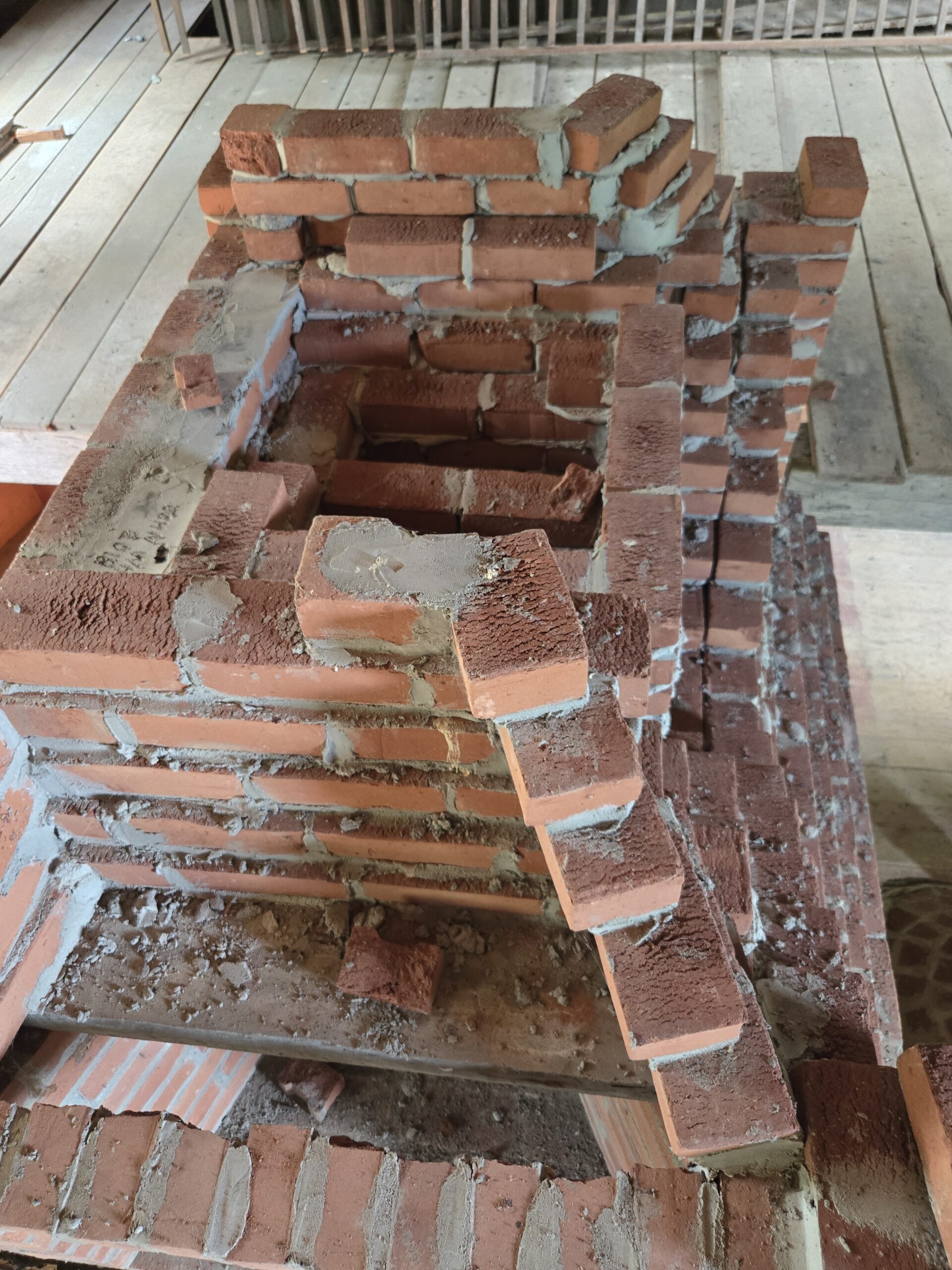
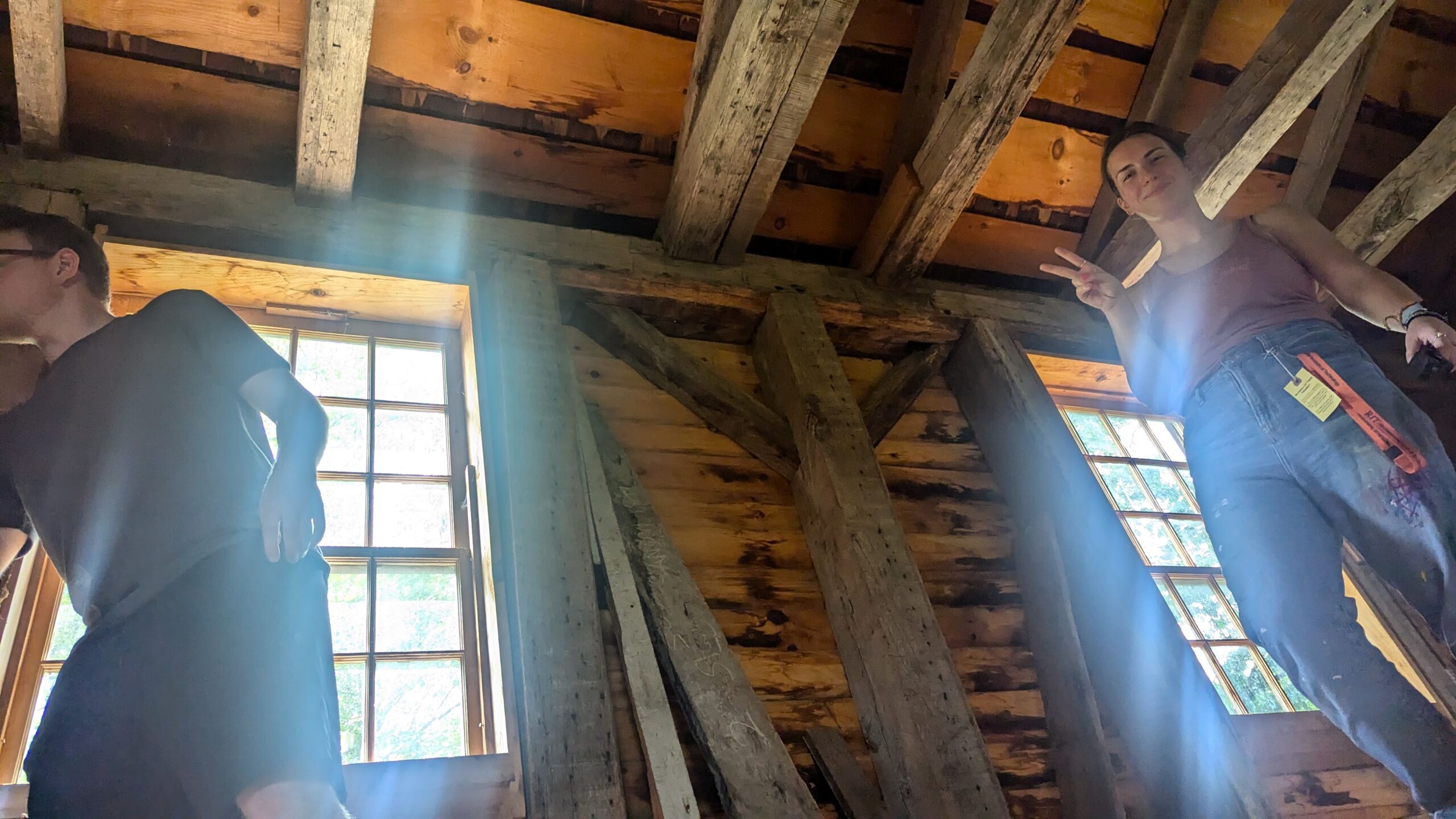
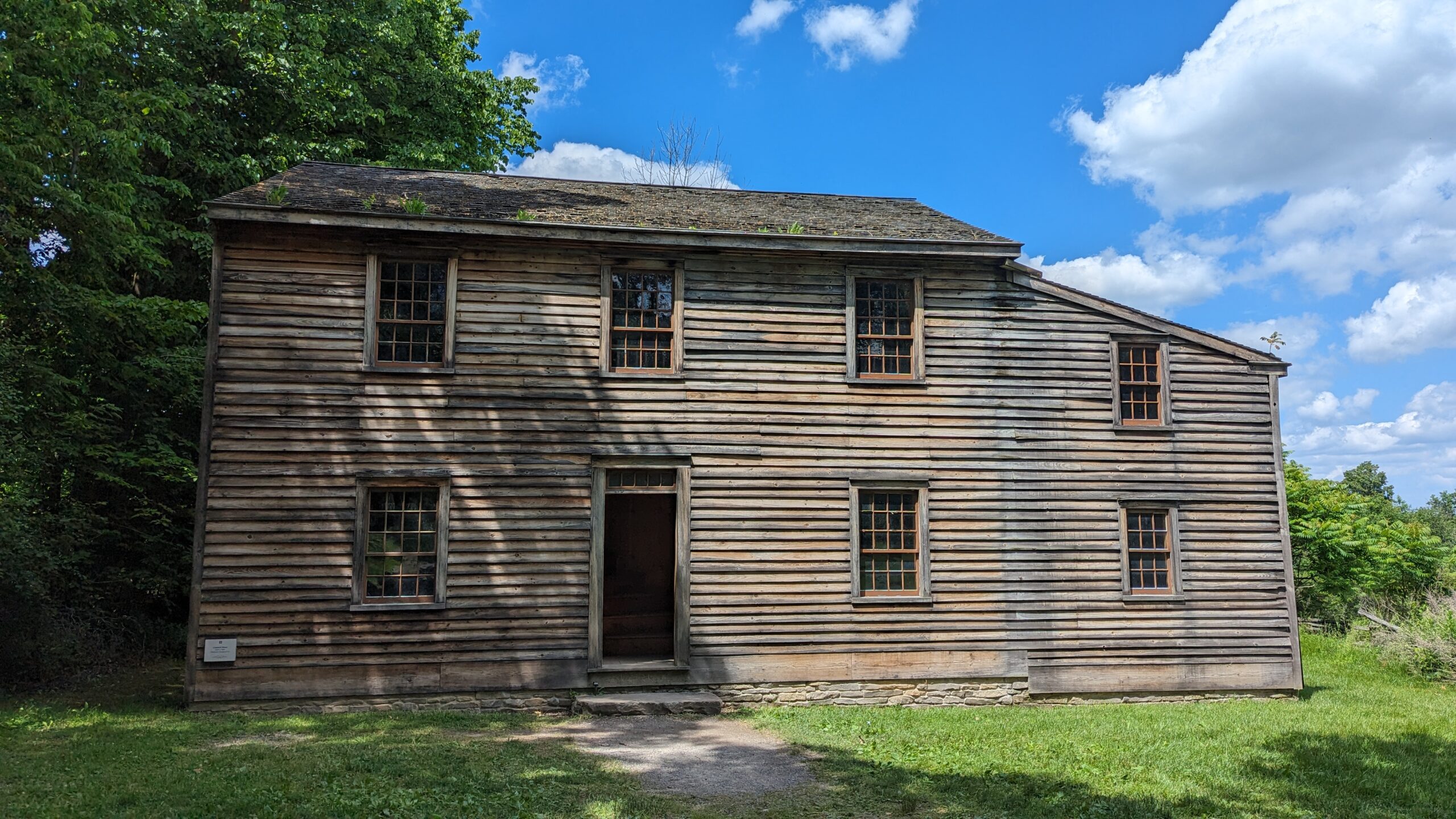
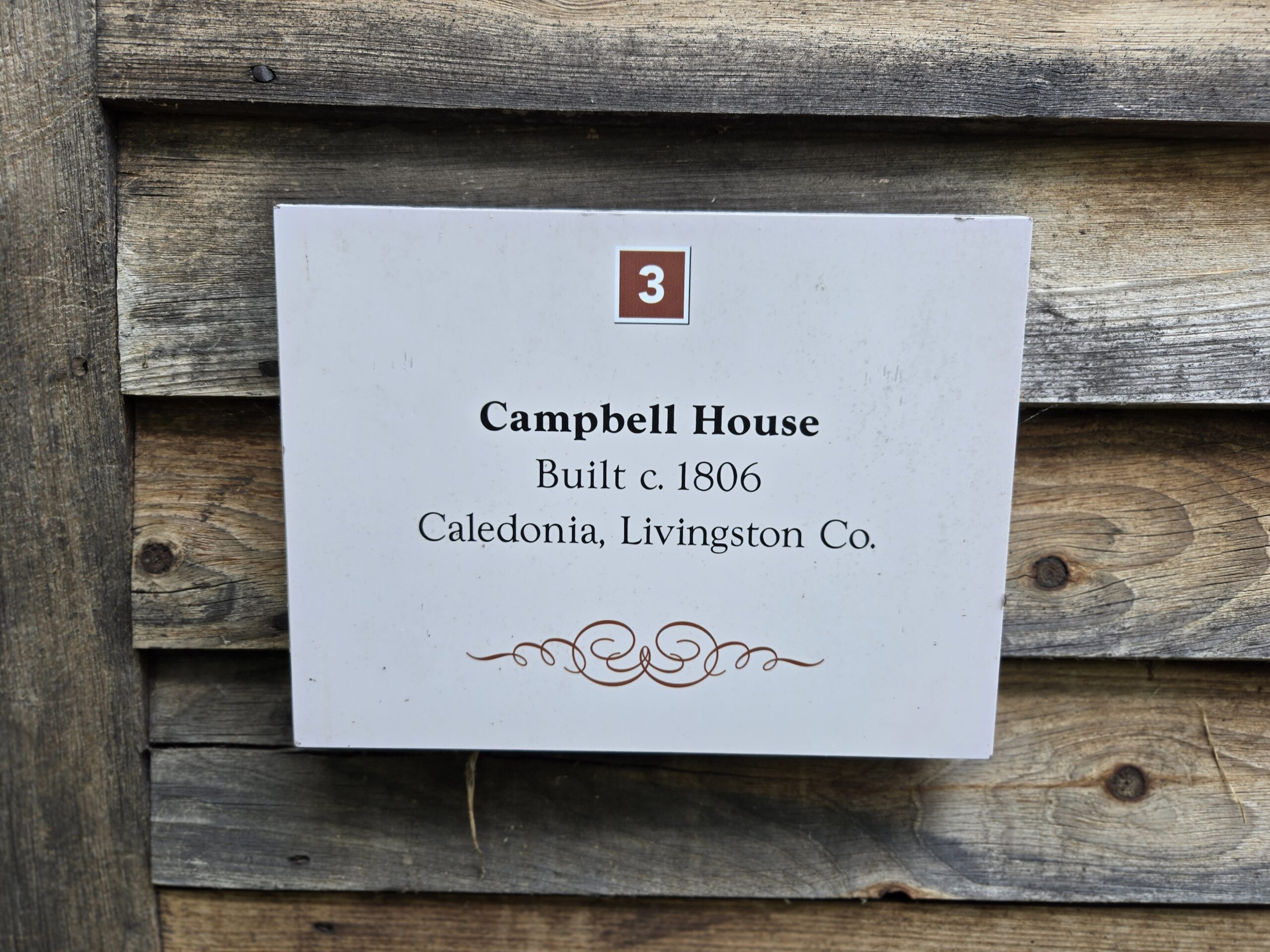
The Campbell House- back viewThe Campbell House-firstlookCampbellHouse_dimensionsCampbell House – a small tree in the wooden gutters!A half-built Beehive Oven!Campbell House-back staircaseCampbell House-lofted roofCampbell House – room westCampbell House-room eastCampbell House-second floor window
Summer of 2024 is off to a great start. I have teamed up with architect and art historian Dr Alissa De Wit-Paul to put the second step of my preservation process to the test. Together, we have garnered support from the Genesee Country Village and Museum to provide us access to their historic Campbell House.
The interdisciplinary nature of my perceived process made us the perfect choice for a Provost’s Learning Innovation Grant from RIT, and an additional award from the Wehrheim Family, who are staunch supporters of historic sites and museums.
On top of this, my project was featured in a promo video to showcase RIT’s longstanding relationship with the Genesee Country Village and Museum, which then gave me room to request an edit of the clip to help share my idea with more potential partners and funders (fingers crossed).
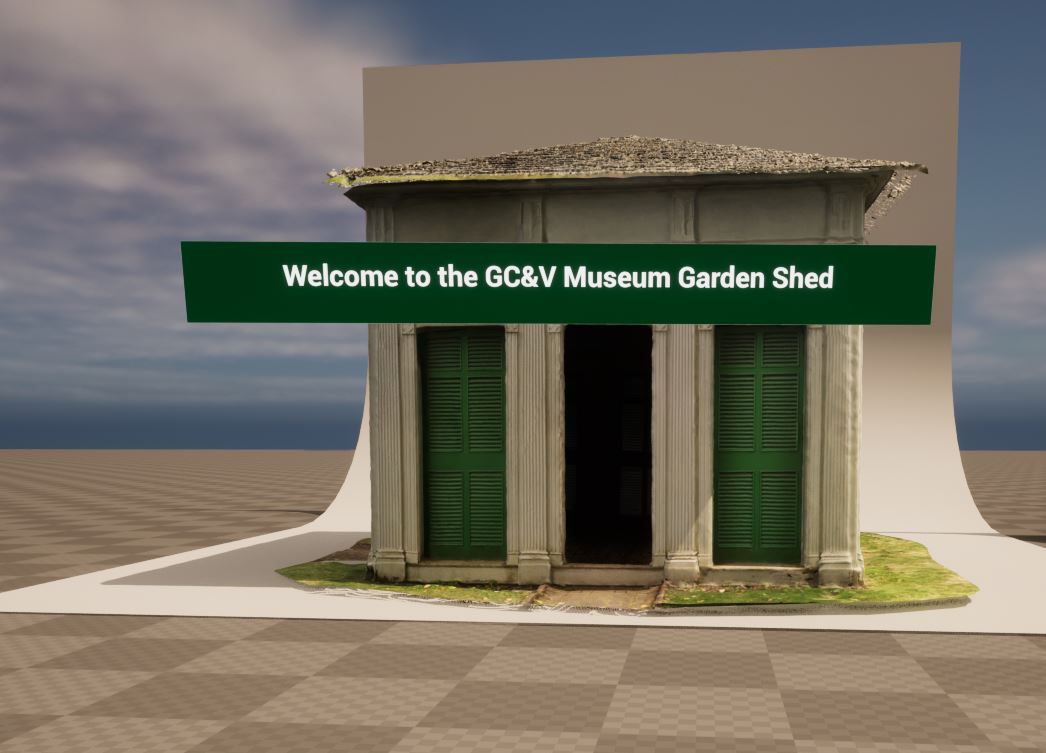
This was the export that was play-tested by students of the Museum Sciences program (MUSE360), thanks to the support of Dr. Samaya Nasr at RIT. Here, we learned that the students struggled with the speed of the navigation tools and wished they had the option to fly.
From a Museum Sciences perspective, they were also very interested in learning more about the structure in a narrative sense, which, of course, was not part of our goals for this test. However, this feedback was extremely valuable as it provided directions for future iterations.
Similarly, I brought this test game to an Architecture course for review as well. Dr. Alissa De Wit-Paul from the RIT Sustainable Architecture program tested the game by sharing it with two groups of students. One group was learning about sustainable design in an online course, and the second was doing so in-person and therefore could physically visit the site.
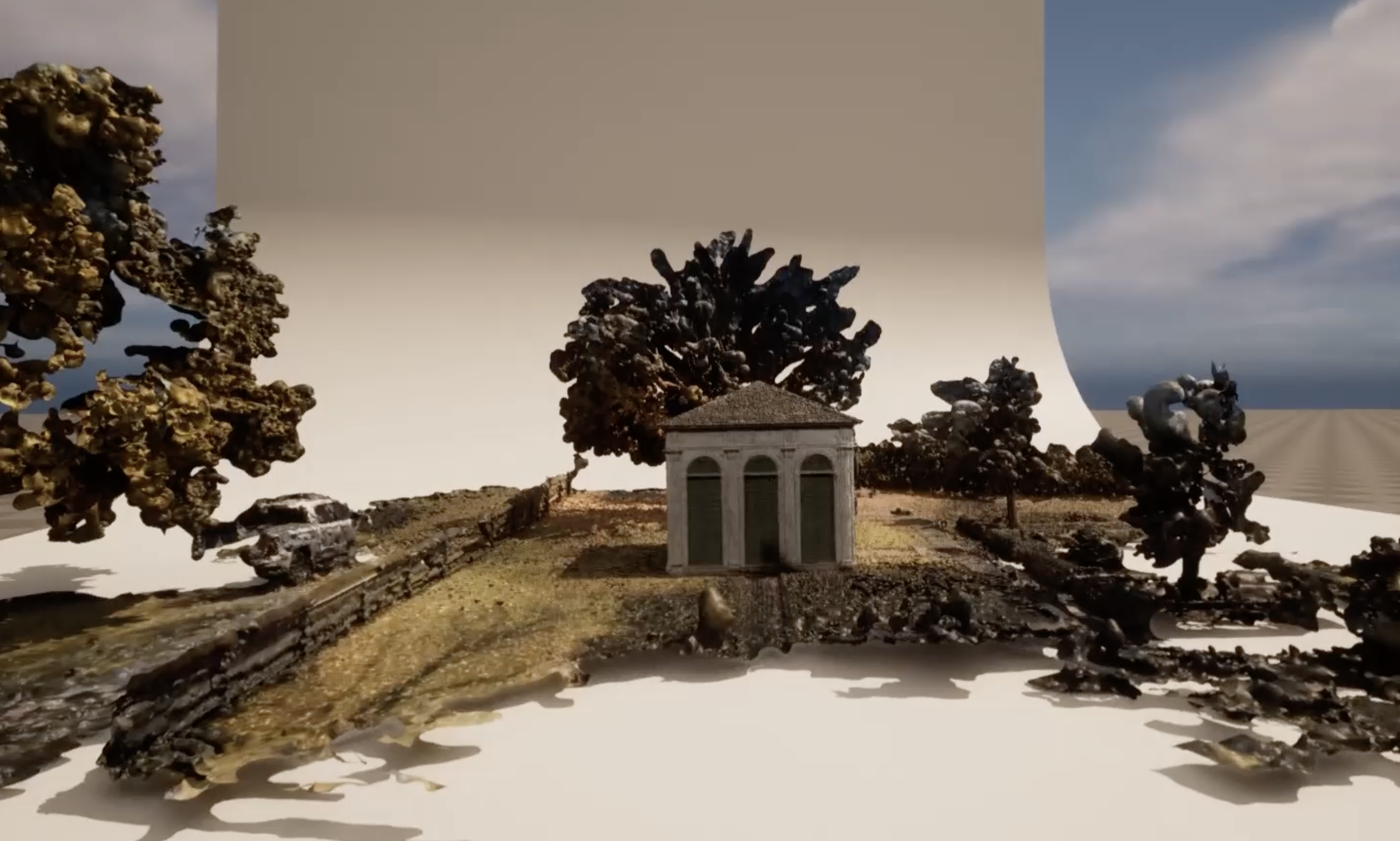
Our online users immediately felt like the game provided a stronger spatial understanding of the building, however, a key issue was in how our animation team built the surroundings. As it happens, Architecture is very reliant on site-specific design (shocking), and placing the building in a rocky-mountain-circled glen with a picturesque well and pretty grass just didn’t give the students what they needed. The pumpkins were even more traumatizing to the serious study of architectural preservation!
The in-person students has similar feelings regarding the siting of the scan. And while a scan cannot live up to a real-life experience (yet), having access to it when developing sustainable designs was helpful.
Overall, the consensus was that animators should not be allowed to record real-life on their own, but with a partnership, this could be the start of a beautiful new journey!
Exciting news continues! I won the Frank J Romano Endowed Prize for innovative use of technology working with students. The Digital Preservation Process has evolved into the Digital Interactive Preservation method, or DIP method.
Two reasons for this: one, because the RIT CHIP Research group, led by Dr Juilee Decker and Dr David Messinger has been such a powerful source of support for my research. Two, CHIP and DIP make a wonderful pairing!
So grateful for this show of support from my college. The DIP method has continued to expand and is living up to my initial assertions of the need to bring multiple fields of study together to ensure the best possible results.
The DIP team has formally expanded to include the active participation of the RIT Sustainable Architecture program, with Dr Alissa De Wit-Paul joining me as co-PI in all of our applications for funding and support going forward.
Even more exciting is the participation of students from animation, 3D Digital Design, Museum Sciences and architecture in our next venture.
Special thanks to the Genesee Country Village and Museum, the RIT Center for Imaging Sciences and, of course RIT’s leadership for their support of our research.
The special topics course was a success! Not only did my four students get highly involved in refining the process, but we were able to successfully export a few different samples of the game, ready to play and with a secondary level to show a few additional details preserved during our research.
From our tests, we discovered how useful it is to have humans working alongside good scanning techniques. We used gimbal powered selfie-sticks to keep cameras level as we scanned features high up on the walls. Then, we were able to clean up the geometry using the additional photogrammetry we employed in our process.
This helped clarify the need to bring in a modular creation approach, since the process of transferring textures can be cumbersome on big sections of the building.
Exciting stuff! Next up: getting non-animators to play the game and give us feedback.