Tag: interdisciplinary research

  • Why Make Preservation Accessible to All?

    Why Make Preservation Accessible to All?

    My Lahore Fort digital preservation project is continuing to evolve and spark new results. I am refining my techniques and cementing the method that will serve as the foundation of this project.

    When my pilot project, the Shed Game wrapped up, my students coined the phrase “Interactive Digital Preservation” as a way to represent the uniqueness of my proposed method. My second adventure in prototyping spawned the name to “Digital Interactive Preservation”.

    This was a humorous nod to our RIT Cultural Heritage Imaging and Preservation Research group, internally referred to as “CHIPR”. It just seemed fitting to have a “DIP” to go with the “CHIP” research group. After all, it’s through this group that I met my architectural collaborator and Co-PI, Dr Alissa De Wit-Paul, and it’s through this group that we have been able to present separately and together on the matter of digital preservation around the world.

    As I balance my sheets from my previous grant, I am happy to note my progress. With the site scans, I now have a clear roadmap for steps and resource-management. These tests have also reinforced the need to bring back the original teaching/educational component back into the process. The core goal is and always has been to share this technique with as many people as possible and enable a broad-scale effort to preserve history from all corners of the globe. Making it cost less (than the standard physical and digital methods) and use more accessible skills (art, architecture and analysis) is more impactful in the long run.

    The DIP method stands to engage local communities in the process of preserving their own history. It provides smart people with the ability to engage in meaningful work that bolsters their own communities. These people will act as witnesses to the cultural sites of their own ancestors, saving in written and pictorial form key elements and put their knowledge in a place where it can be shared far and wide. This method gives them the agency to control their own cultural narratives, because they’re not relying on others to tell them what their heritage means. Most importantly, it allows them to share their culture with others in a way that takes into account their unique cultural point of view.

    As someone who has always balanced multiple identities, I have refined the art of translating values and ideas from one mode to another. Ultimately, all cultures and people start from the same place of idealism. Everyone believes in truth, honesty and goodness; they just have different ways of expressing themselves.

    By revisiting our historical narratives, we can remove the barriers to communication and lay the foundations for the rich variety of human creativity that the world has to offer.
  • FACSS – SciX Conference 2024

    FACSS – SciX Conference 2024

    The Great Scientific Exchange!

    Another wonderful experience and my first trip to North Carolina. The FACSS stands for The Federations of Analytical Chemistry and Spectroscopy Societies, and the SciX Conference represents the Great Scientific Exchange, a conference that has been running since 1974.

    This year marks the 50th year of this international conference at the forefront of analytical chemistry and allied sciences. A small contingent of Digital Preservationists from RIT formed a panel presentation and got to share their work with today’s scientist community.

    I am very grateful to have been included in that team, thanks to CHIPR and Dr Juilee Decker.

  • Scanning @ the Campbell House

    Scanning @ the Campbell House

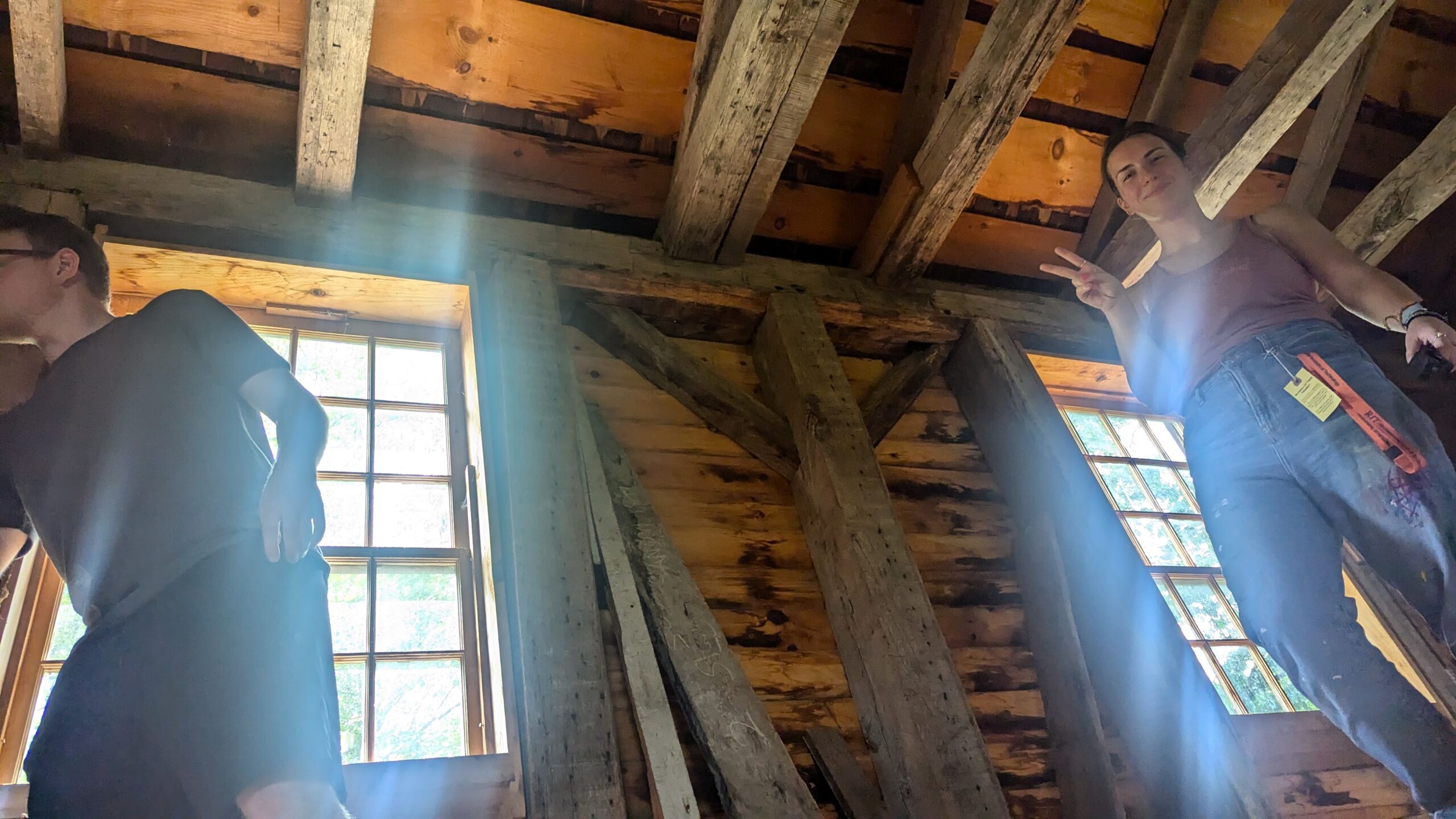
    Our work has begun! With the tiniest team possible, we picked up our scanning equipment (iPads, smartphones and measuring tools) and jumped headlong into the Digital Interactive Preservation process.

    Getting animators to work with architects is incredibly fun, particularly when you realize how similar the fields really are. Despite the difference in mediums, it’s clear that both industries require a strong attention to ergonomics and the human psyche. In Architecture, every detail of a building has to be considered and planned, as it is in CG creation. These similarities made the interdisciplinary workflow all the more enjoyable, as we were able to exchange information and compare and contrast techniques between recording.

    Our next steps after field visits begin with processing the scans in virtual space and simultaneously building architectural plans and representations, then integrating them.

    A huge Thanks to the RIT Center for Imaging Sciences and Tim Bauch, our drone pilot, who has invested so much of his time helping us solve tricky questions and perfecting the drone-capture process.

  • The Campbell House @GCVM

    The Campbell House @GCVM

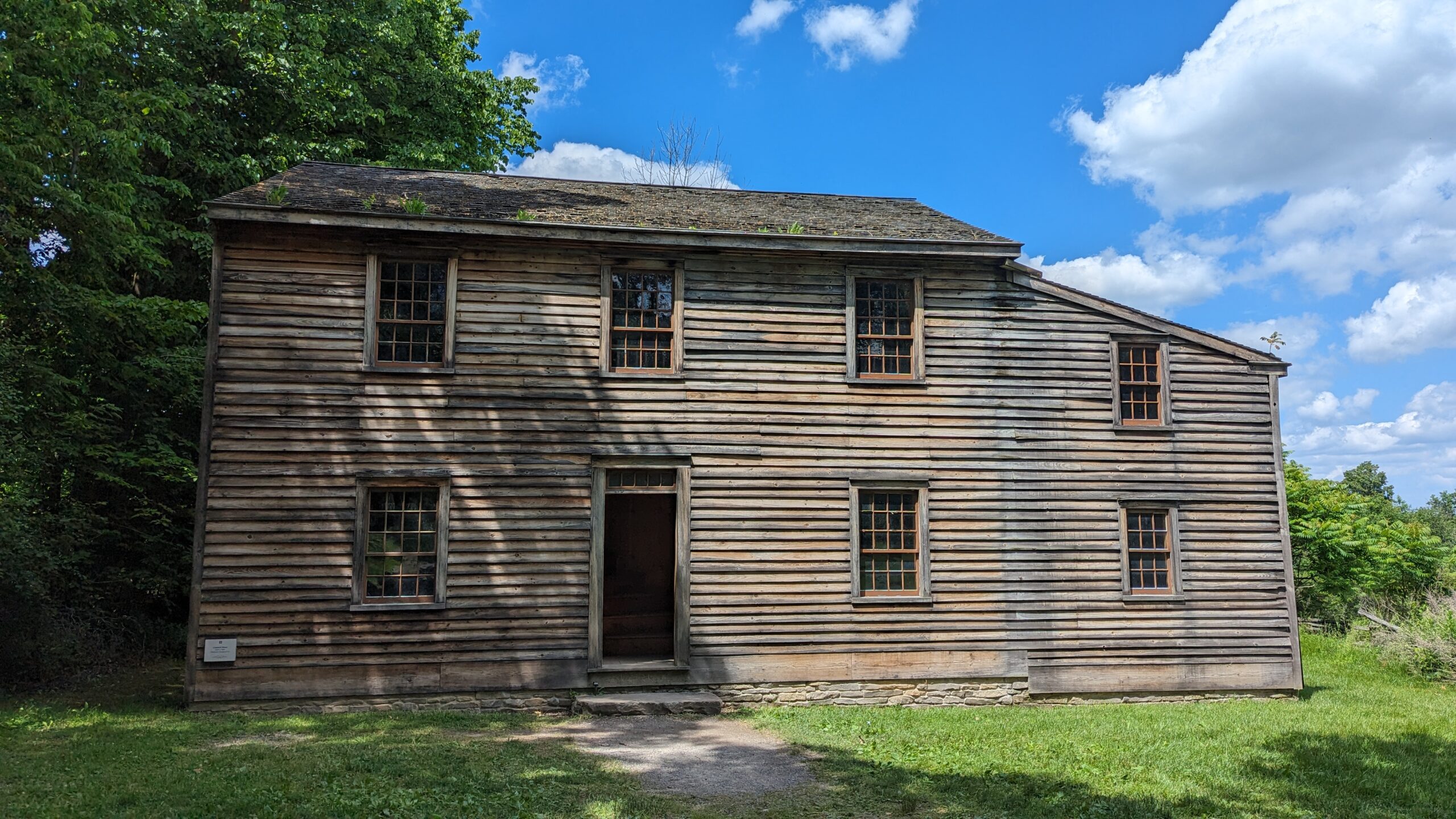
    A huge shout out to the Genesee Country Village and Museum for their continuous support of the Digital Interactive Preservation Project! With the success of the pilot project, I have now teamed up with Dr. Alissa De Wit-Paul to scan another building and develop a fuller, more architecture-friendly process of scanning an historic site!

    Scanning and process updates coming soon!

  • The SHED Game Walkthrough

    The SHED Game Walkthrough

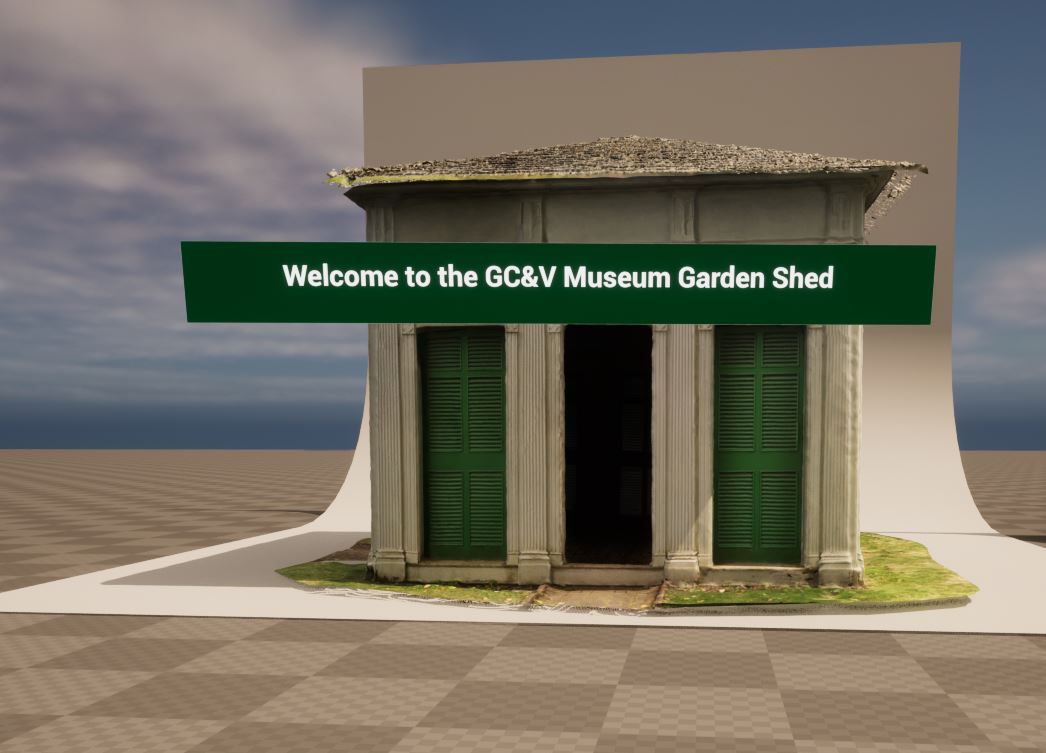
    A short video of the first draft.

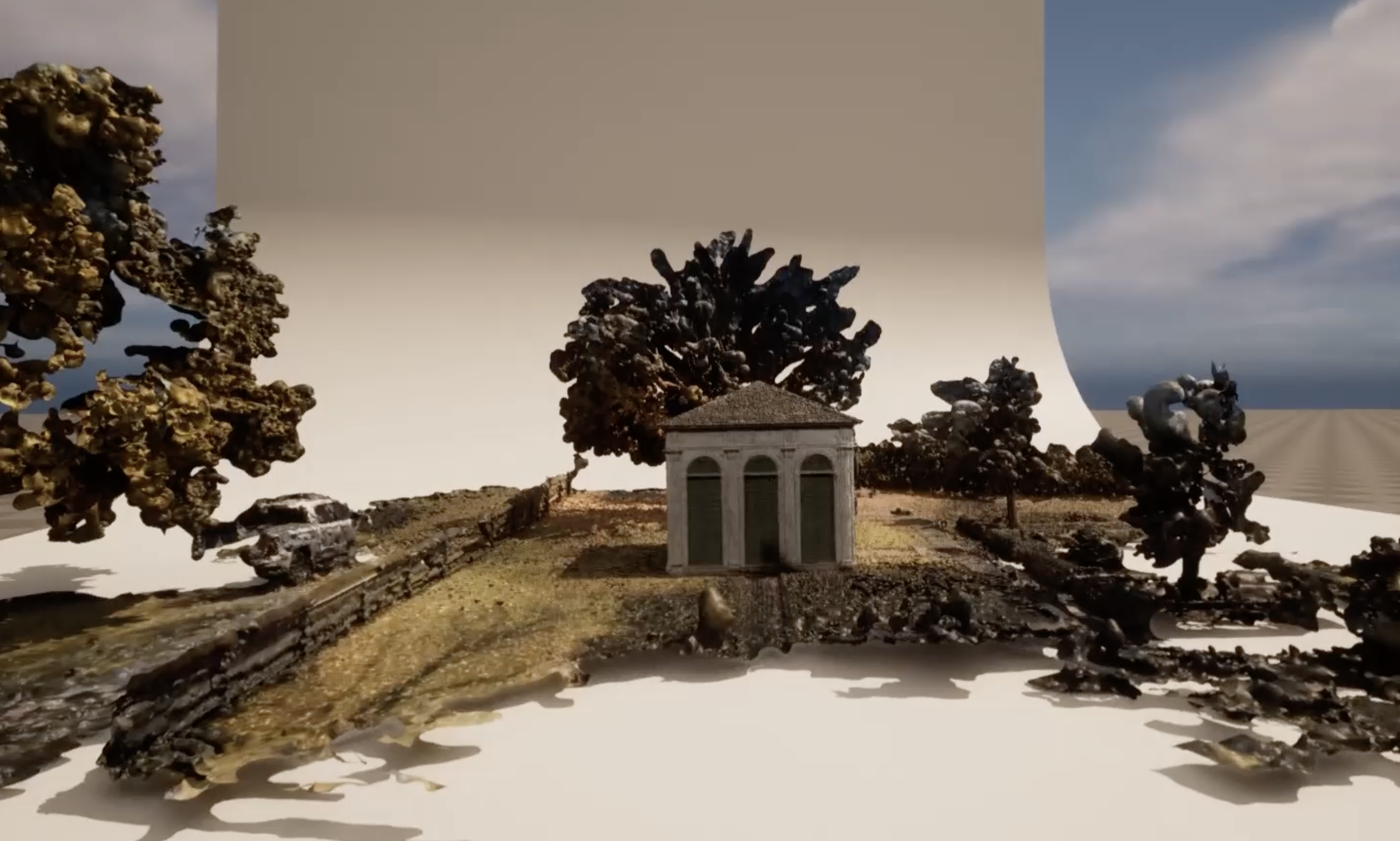
    This was the export that was play-tested by students of the Museum Sciences program (MUSE360), thanks to the support of Dr. Samaya Nasr at RIT. Here, we learned that the students struggled with the speed of the navigation tools and wished they had the option to fly.

    From a Museum Sciences perspective, they were also very interested in learning more about the structure in a narrative sense, which, of course, was not part of our goals for this test. However, this feedback was extremely valuable as it provided directions for future iterations.

    Similarly, I brought this test game to an Architecture course for review as well. Dr. Alissa De Wit-Paul from the RIT Sustainable Architecture program tested the game by sharing it with two groups of students. One group was learning about sustainable design in an online course, and the second was doing so in-person and therefore could physically visit the site.

    Our online users immediately felt like the game provided a stronger spatial understanding of the building, however, a key issue was in how our animation team built the surroundings. As it happens, Architecture is very reliant on site-specific design (shocking), and placing the building in a rocky-mountain-circled glen with a picturesque well and pretty grass just didn’t give the students what they needed. The pumpkins were even more traumatizing to the serious study of architectural preservation!

    The in-person students has similar feelings regarding the siting of the scan. And while a scan cannot live up to a real-life experience (yet), having access to it when developing sustainable designs was helpful.

    Overall, the consensus was that animators should not be allowed to record real-life on their own, but with a partnership, this could be the start of a beautiful new journey!

  • Frank J Romano Endowed Prize

    Frank J Romano Endowed Prize

    Exciting news continues! I won the Frank J Romano Endowed Prize for innovative use of technology working with students. The Digital Preservation Process has evolved into the Digital Interactive Preservation method, or DIP method.

    Two reasons for this: one, because the RIT CHIP Research group, led by Dr Juilee Decker and Dr David Messinger has been such a powerful source of support for my research. Two, CHIP and DIP make a wonderful pairing!

    So grateful for this show of support from my college. The DIP method has continued to expand and is living up to my initial assertions of the need to bring multiple fields of study together to ensure the best possible results.

    The DIP team has formally expanded to include the active participation of the RIT Sustainable Architecture program, with Dr Alissa De Wit-Paul joining me as co-PI in all of our applications for funding and support going forward.

    Even more exciting is the participation of students from animation, 3D Digital Design, Museum Sciences and architecture in our next venture.

    Special thanks to the Genesee Country Village and Museum, the RIT Center for Imaging Sciences and, of course RIT’s leadership for their support of our research.

  • Processing the SHED @ RIT

    Processing the SHED @ RIT

    The special topics course was a success! Not only did my four students get highly involved in refining the process, but we were able to successfully export a few different samples of the game, ready to play and with a secondary level to show a few additional details preserved during our research.

    From our tests, we discovered how useful it is to have humans working alongside good scanning techniques. We used gimbal powered selfie-sticks to keep cameras level as we scanned features high up on the walls. Then, we were able to clean up the geometry using the additional photogrammetry we employed in our process.

    This helped clarify the need to bring in a modular creation approach, since the process of transferring textures can be cumbersome on big sections of the building.

    Exciting stuff! Next up: getting non-animators to play the game and give us feedback.

  • The Shed Game @ the Genesee Country Village and Museum: A Quick Summary

    This is the shortest possible update of the pilot DIP process.

    A module of the super-epic Lahore Fort Project is the method I have suggested to use game creation workflows to digitally preserve buildings and sites. In October of 2022, I, and a team of animation students were given the opportunity to put this theory to the test and try to make it happen.

    Thanks to this smart and resourceful group, we were able to test out different types of scanning methods, compare them to other capture processes and settled on a combination workflow that uses the best of LiDAR and photogrammetry to help refine and import this building into Unreal Engine.

    For the exterior roof scan, we “borrowed” a drone and pilot from the RIT Center for Imaging Sciences and got to explore GPS-based scanning for geographical terrain.

    In the few weeks that remained, we were able to cobble together a small demo to show off how much fun it could be to experience a scanned location in an interactive environment!

    Thanks to RIT, the Genesee Country Village and Museum, and the Center for Imaging Sciences this method went from being theoretical to prototyped!

  • GDC and Beyond!

    GDC and Beyond!

    What a wild ride!! If you’ve never had a chance to go, I highly recommend attending the Game Developer’s Conference. Feel like stepping it up? Go as a speaker!

    There were a number of awesome things about this conference, not least the fact that 2022 had a much bigger in-person attendance than any post-pandemic year. After being really isolated through the pandemic, this was both an exhilarating and terrifying experience.

    Getting to spend a week immersed in the world of game creation, watching and learning from the gurus of the industry and being surrounded with that level of talent is inspiring on so many levels. I attended talks about the state of the industry, learned about art, management, marketing, and the metaverse.

    For me, the GDC was (is) the most prestigious place I had ever gotten to present my idea. Even carzier was the fact that there were a few other talks related to cultural heritage development and preservation. Knowing this made me feel like my idea had real merit!

    ground-level shot of the Moscone Center entrance with a Game Developers Conference Banner stretched across it

    My talk was scheduled for Friday afternoon, the last day of the conference in the final timeslot of the conference. That entire week, I vacillated between gratitude at the idea of not drawing any attendees for my talk, and the imagined horror of potentially having to present to an empty hall.

    I rewrote my speech about a hundred times and kicked myself for applying to speak in the first place. After all, I was presenting an idea that was remarkably simple in its technical scope. I had zero proof-of-concept examples, other than some minor tests based on my own photography of a monument. My research and references focused more on games and non-academic worlds than on actual real-life cultural sites. I had nightmares about being booed off stage by game professionals who were angry that I had wasted their time with a dumb idea.

    The rest of the time, I attempted to network with people in the various social events of the week. I talk to my students a lot about the importance of networking. I need to go over my notes more carefully next time, because I’m still really bad at it! 🙂

    Friday afternoon came, I was nervous but ready, and the doors opened. I was shocked when one stranger walked in, then flabbergasted when more and more attendees started coming in. Ultimately, the crowd was about two to three times the size of my average classroom, and I began to speak.

    The thirty-minutes just flew by and I completed my speech without being booed. Then I got questions, and more, until we ended up being moved out into an overflow room!

    My mind was buzzing with excitement. I made a bunch of connections with people excited about this topic and excited to explore opportunities to collaborate. The craziest moment was when I was approached by the Director of the Cultural Antiquities Task Force from the US Department of State to explore ways to support my project both through funding and through introductions!

    Brimming with hope and the possibility of making significant progress on this project, I barely needed the plane to fly home!